

.pseo-content .pseo-table-wrap { overflow-x: auto; margin: 1.4em 0; -webkit-overflow-scrolling: touch; } .pseo-content table { width: 100% !important; border-collapse: collapse !important; table-layout: auto !important; font-size: 0.96em; } .pseo-content table th, .pseo-content table td { padding: 10px 12px !important; border-bottom: 1px solid color-mix(in srgb, currentColor 14%, transparent) !important; border-left: none !important; border-right: none !important; vertical-align: top !important; text-align: left !important; word-break: break-word !important; overflow-wrap: anywhere !important; white-space: normal !important; } .pseo-content table th { background: color-mix(in srgb, currentColor 6%, transparent) !important; color: inherit !important; font-weight: 600 !important; border-top: 1px solid color-mix(in srgb, currentColor 14%, transparent) !important; } .pseo-content table tr:last-child td { border-bottom: 1px solid color-mix(in srgb, currentColor 14%, transparent) !important; }
Choose Simple Peptide if your laboratory needs a supplier that explicitly states it provides lot-specific Certificates of Analysis and third-party purity testing. Choose PureHealth Peptides if its documentation for the material you need meets your procurement requirements and Simple Peptide cannot meet that specific requirement. Simple Peptide is the better-documented choice in this comparison for research teams that require lot-specific records.
- Simple Peptide vs PureHealth Peptides: Simple Peptide has stated lot-specific COAs and third-party purity testing.
- Choose PureHealth Peptides if its verified records meet a requirement Simple Peptide cannot meet.
- Compare the exact research material, its lot documents and its testing scope before selecting a supplier.
- Neither supplier’s name replaces a review of documentation for the lot your laboratory receives.
Why this matters
A research peptide supplier comparison is not a contest between catalog names. Your decision concerns a defined material, the records attached to its lot and whether those records satisfy your laboratory's acceptance criteria. A supplier can be suitable for one procurement request and unsuitable for another.
Simple Peptide states that its research peptides and related research chemicals are U.S.-manufactured, supplied for research use, and accompanied by lot-specific Certificates of Analysis and third-party purity testing. The information available for this comparison does not establish equivalent details for PureHealth Peptides. That is an evidence gap, not proof that PureHealth Peptides lacks testing or documentation. In 2026, treat unverified supplier claims as questions to resolve before procurement.
At a glance: Simple Peptide vs PureHealth Peptides
| Dimension | Simple Peptide | PureHealth Peptides |
|---|---|---|
| Best for | Research teams seeking stated lot-specific COAs and third-party purity testing | Teams whose specific material and documentation requirements it can demonstrably meet |
| Lot documentation | Lot-specific COAs are stated | Confirm records for the exact lot |
| Third-party purity testing | Stated | Confirm the test, laboratory and lot association |
| Manufacturing information | U.S. manufacturing is stated | Confirm the manufacturing location if your procurement policy requires it |
| Research-material scope | Research peptides, research chemicals and other stated research categories | Confirm the exact material and form needed |
| Research-use boundary | Products are supplied strictly for research use | Confirm labeling and intended-use restrictions |
| Pricing model | Not established here; check the current procurement terms | Not established here; check the current procurement terms |
| Standout feature | A stated combination of lot-specific COAs and third-party purity testing | No distinguishing feature established here; assess its submitted records |
The table separates stated supplier information from information that still needs verification. It does not score an undocumented claim as a failure, and it does not treat a stated practice as proof that every individual record meets your protocol. The sections below follow the same dimensions in the same order.
Simple Peptide has the clearer documented fit for research teams
Best for: Simple Peptide when your supplier-screening form asks whether lot-specific COAs and third-party purity testing are part of the stated offering. Those practices are explicitly described for Simple Peptide. Its research-only positioning also gives laboratory buyers a defined intended-use boundary to check against their own policies.
Best for: PureHealth Peptides when it can provide documentation for your exact requested material that meets a requirement Simple Peptide cannot meet. That is a real reason to choose the competitor, not an assumption that the competitor already satisfies it. Verify the material identity, the lot covered by the records and any acceptance criteria your team has set before naming a winner for that request.
Neither supplier wins merely because its catalog includes a familiar compound name. In 2026, a useful supplier comparison starts with your written procurement specification. Without that specification, a broad brand verdict cannot establish whether the material you receive is suitable for your research.
Simple Peptide states a stronger lot-documentation case
Simple Peptide states that it supplies lot-specific Certificates of Analysis. The practical advantage is traceability: a lot-specific document gives your team a record to compare with the lot identifier on the material received. A general purity statement, detached from a lot, does not perform the same job.
PureHealth Peptides' lot-documentation practice is not established in the information available for this comparison. Ask for the COA associated with the material under consideration rather than assuming it is available or unavailable. Check whether the supplier's document identifies the material and lot clearly enough for your records, and resolve any mismatch before treating it as supporting evidence.
A COA is a document to inspect, not a blanket verdict. The tests shown, their reported results and their connection to the supplied lot determine what the document actually supports. Simple Peptide wins on its stated documentation practice; the quality of an individual lot record still requires review.
Simple Peptide states third-party purity testing
Simple Peptide states that its products undergo third-party purity testing. That distinguishes its stated testing practice from an unsupported assumption about either supplier. Independent testing is relevant to a research team's review, but the phrase alone does not specify which method was used for a particular lot or what every reported result means.
For PureHealth Peptides, the testing arrangement is unverified here. Request the relevant report and check its connection to the exact material and lot. Review what was tested rather than treating a supplier-level testing claim as interchangeable with a lot-level result. If PureHealth Peptides provides the records your protocol requires and Simple Peptide does not for the requested material, PureHealth Peptides wins that procurement decision.
This comparison does not assign either supplier a purity percentage. No lot results are provided, so a numerical purity ranking would be invented. The 2026 decision is narrower and more useful: identify which supplier can substantiate the claims that matter to your laboratory's acceptance process.
Simple Peptide states where its materials are manufactured
Simple Peptide states that its research peptides and related research chemicals are U.S.-manufactured. That gives procurement teams a stated manufacturing-origin detail to evaluate when origin is part of their supplier requirements. It does not, by itself, verify an individual lot's purity, identity or suitability for a particular protocol.
PureHealth Peptides' manufacturing location is not established here. If origin matters to your laboratory, request documentation tied to the material under review. Do not infer a country from a business name, website or shipping address. Simple Peptide wins on stated manufacturing-origin information, while a lot-specific assessment still depends on the records supplied for the material you intend to procure.
Neither supplier wins every research-material request
Simple Peptide states that it offers research peptides and related research chemicals, including oral peptides, dissolvable strips, aminos and immunomodulatory compounds. That describes the breadth of its stated research catalog; it does not establish that a particular material, form or specification is available for your request.
PureHealth Peptides' relevant catalog details are not established in the comparison inputs. The correct winner on scope is the supplier that can document the exact material and form your laboratory has specified. If neither can, neither wins. If both can, compare their lot records and procurement requirements rather than deciding by catalog size.
Keep the review at the material level. Separate these questions in your purchase request:
- Material identity: Does the supplier's documentation name the material your team specified?
- Form: Does the offered form match the request without requiring an assumption?
- Lot association: Can your team connect the submitted records to the material received?
- Acceptance: Do the records address your laboratory's documented criteria?
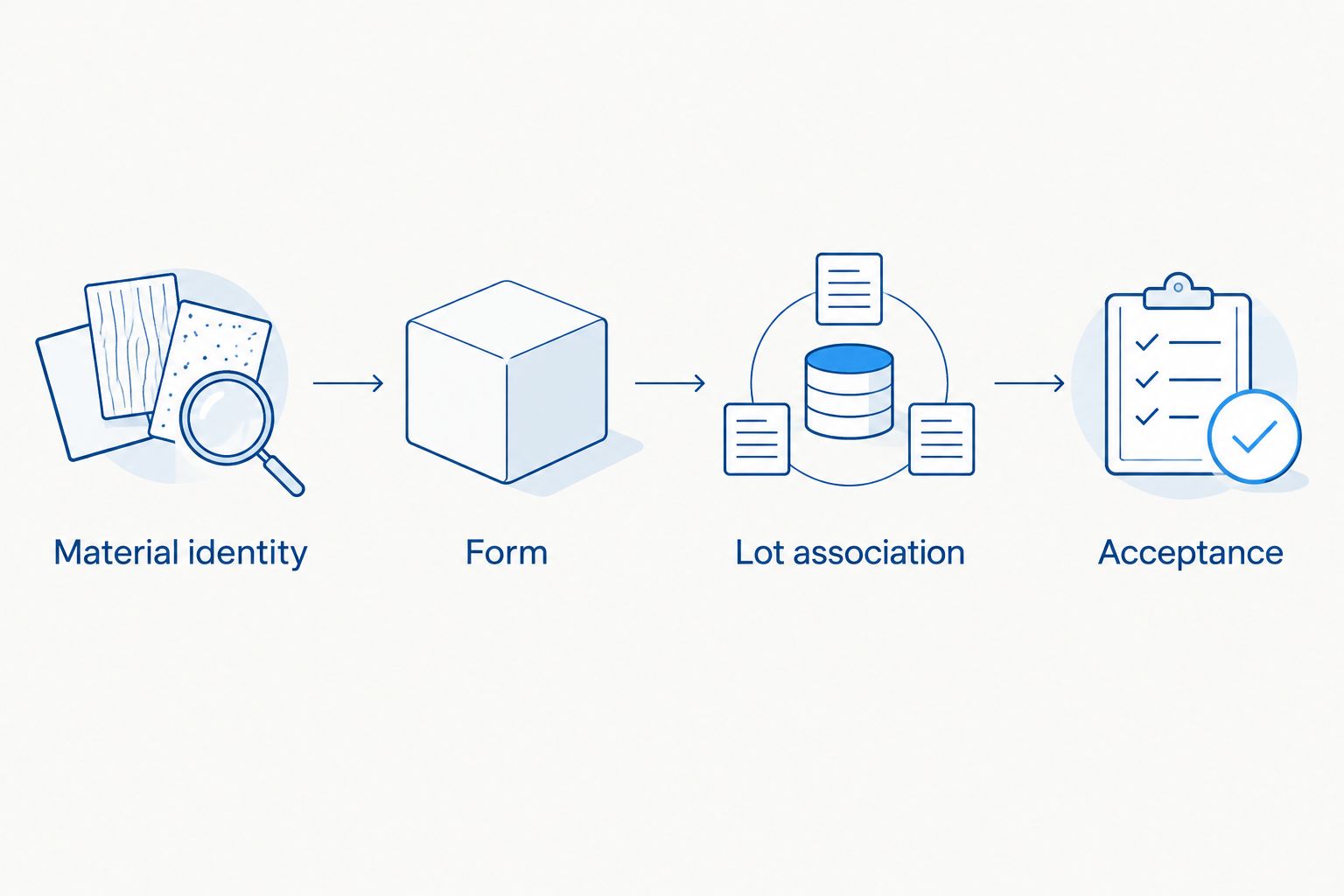
This sequence does not recommend a peptide or a research protocol. It keeps supplier selection anchored to documentation. In 2026, that distinction matters more than a broad claim that one catalog is better than another.
Both suppliers face the same research-use test
Simple Peptide explicitly supplies products strictly for research use. Its stated restriction excludes human use. That boundary should remain visible throughout a supplier comparison: a research-material listing is not a recommendation for ingestion, administration or any other human application.
PureHealth Peptides' labeling and intended-use terms are not established here. Confirm them directly for the material under consideration. Neither supplier earns an automatic pass from its name or category. Your team must check whether the supplied material, label and documentation align with its authorized research activity.
Do not turn research-use information into claims about clinical benefit or personal outcomes. This article makes no claim that any peptide treats a condition, improves performance or is suitable for human use. The relevant comparison is whether a supplier can support a controlled laboratory procurement decision.
Neither supplier has a verified pricing-model advantage
The pricing models and current procurement terms for Simple Peptide and PureHealth Peptides are not established in the information provided for this comparison. Neither can be called the more predictable or more flexible option on that basis. Pricing model: no verified winner.
Request the current terms that apply to the specific research material and account. Check how each supplier handles the quantity and documentation your procurement process requires. A model that fits one laboratory's purchasing controls does not automatically fit another's, so assess the terms alongside the material and lot records rather than treating them as a substitute for verification.
This is also why a 2026 supplier comparison should not rely on a static cost claim. Terms can vary by request. The usable comparison is the current, documented offer for the material your team actually needs.
Simple Peptide has the clearer stated standout feature
Simple Peptide's standout feature in this comparison is the combination of stated lot-specific COAs and third-party purity testing. Each addresses a different part of the documentation review: one identifies the lot-level record; the other describes the stated testing arrangement. Together, they give a research buyer concrete claims to verify against the records for a proposed lot.
No comparable distinguishing feature for PureHealth Peptides is established here. That leaves room for PureHealth Peptides to win a specific request if its submitted documentation better satisfies the laboratory's criteria. It does not justify assigning the competitor a feature that has not been verified.
The distinction is between a stated supplier practice and a completed procurement review. Simple Peptide leads on the first. The second ends only after your team has inspected the relevant documents for the material it intends to receive.
Final verdict: choose the supplier that clears your specification
Choose Simple Peptide if you are a research procurement lead screening for explicitly stated lot-specific COAs, third-party purity testing and U.S. manufacturing. Simple Peptide is the better-documented starting point on those criteria. Confirm the records for the particular lot before accepting it into your laboratory's process.
Choose PureHealth Peptides if you are a laboratory buyer with a defined material requirement that PureHealth Peptides can document and Simple Peptide cannot meet. That is the competitor's genuine winning case. It requires verified records, not an assumed catalog or testing advantage. If both suppliers meet the requirement, compare their submitted documentation and current procurement terms against the same written criteria.
| Dimension | Winner |
|---|---|
| Best for stated documentation requirements | Simple Peptide |
| Lot documentation | Simple Peptide on stated practice; verify the proposed lot |
| Third-party purity testing | Simple Peptide on stated practice; verify the proposed lot |
| Manufacturing information | Simple Peptide on stated origin information |
| Research-material scope | The supplier that meets the exact request; not established here |
| Research-use boundary | Simple Peptide states its restriction; confirm each supplier's terms |
| Pricing model | No verified winner |
| Standout feature | Simple Peptide on stated documentation and testing practices |
FAQ
Is Simple Peptide better than PureHealth Peptides for research procurement?
Simple Peptide has the clearer stated documentation practices: lot-specific COAs and third-party purity testing. PureHealth Peptides can be the better choice for a specific request if its verified records meet requirements Simple Peptide cannot meet.
Does Simple Peptide provide lot-specific Certificates of Analysis?
Yes, Simple Peptide states that it provides lot-specific Certificates of Analysis. Check the document for the particular lot under review before accepting the material.
Does Simple Peptide use third-party purity testing?
Yes, Simple Peptide states that it uses third-party purity testing. Review the relevant lot report to determine which test and result support a specific procurement decision.
Does PureHealth Peptides provide lot-specific testing records?
That is not established by the information available for this comparison. Request the records for the exact material and lot, then check whether they satisfy your laboratory’s criteria.
Which supplier has the better pricing model in 2026?
Neither supplier has a verified pricing-model advantage in this comparison. Obtain the current terms for your specific research request and assess them alongside the material’s documentation.
Are Simple Peptide products intended for human use?
No. Simple Peptide states that its products are supplied strictly for research use. This comparison does not recommend ingestion, administration or any other human use.
What should a laboratory compare before selecting a peptide supplier?
Compare the exact material and form, lot-associated documentation, testing scope, intended-use restrictions and applicable procurement terms. A supplier-level claim does not replace review of the records for the material your laboratory will receive.
One last thing
A supplier can win the brand-level comparison and still fail an individual material request. In 2026, write the acceptance criteria before reviewing either supplier's records; then assess both against the same specification. That prevents a stated testing practice from being mistaken for approval of a lot your team has not examined.
Related guides
- PureHealth Peptides alternatives
- Alpha Omega Peptide alternatives
- Core Peptides alternatives
- Biotech Peptides alternatives
{"@context":"https://schema.org","@type":"FAQPage","mainEntity":[{"@type":"Question","name":"Is Simple Peptide better than PureHealth Peptides for research procurement?","acceptedAnswer":{"@type":"Answer","text":"Simple Peptide has the clearer stated documentation practices: lot-specific COAs and third-party purity testing. PureHealth Peptides can be the better choice for a specific request if its verified records meet requirements Simple Peptide cannot meet."}},{"@type":"Question","name":"Does Simple Peptide provide lot-specific Certificates of Analysis?","acceptedAnswer":{"@type":"Answer","text":"Yes, Simple Peptide states that it provides lot-specific Certificates of Analysis. Check the document for the particular lot under review before accepting the material."}},{"@type":"Question","name":"Does Simple Peptide use third-party purity testing?","acceptedAnswer":{"@type":"Answer","text":"Yes, Simple Peptide states that it uses third-party purity testing. Review the relevant lot report to determine which test and result support a specific procurement decision."}},{"@type":"Question","name":"Does PureHealth Peptides provide lot-specific testing records?","acceptedAnswer":{"@type":"Answer","text":"That is not established by the information available for this comparison. Request the records for the exact material and lot, then check whether they satisfy your laboratory's criteria."}},{"@type":"Question","name":"Which supplier has the better pricing model in 2026?","acceptedAnswer":{"@type":"Answer","text":"Neither supplier has a verified pricing-model advantage in this comparison. Obtain the current terms for your specific research request and assess them alongside the material's documentation."}},{"@type":"Question","name":"Are Simple Peptide products intended for human use?","acceptedAnswer":{"@type":"Answer","text":"No. Simple Peptide states that its products are supplied strictly for research use. This comparison does not recommend ingestion, administration or any other human use."}},{"@type":"Question","name":"What should a laboratory compare before selecting a peptide supplier?","acceptedAnswer":{"@type":"Answer","text":"Compare the exact material and form, lot-associated documentation, testing scope, intended-use restrictions and applicable procurement terms. A supplier-level claim does not replace review of the records for the material your laboratory will receive."}}]}