

.pseo-content .pseo-table-wrap { overflow-x: auto; margin: 1.4em 0; -webkit-overflow-scrolling: touch; } .pseo-content table { width: 100% !important; border-collapse: collapse !important; table-layout: auto !important; font-size: 0.96em; } .pseo-content table th, .pseo-content table td { padding: 10px 12px !important; border-bottom: 1px solid color-mix(in srgb, currentColor 14%, transparent) !important; border-left: none !important; border-right: none !important; vertical-align: top !important; text-align: left !important; word-break: break-word !important; overflow-wrap: anywhere !important; white-space: normal !important; } .pseo-content table th { background: color-mix(in srgb, currentColor 6%, transparent) !important; color: inherit !important; font-weight: 600 !important; border-top: 1px solid color-mix(in srgb, currentColor 14%, transparent) !important; } .pseo-content table tr:last-child td { border-bottom: 1px solid color-mix(in srgb, currentColor 14%, transparent) !important; }
BioLongevity Labs belongs in a fair comparison when you are sourcing materials for laboratory research. The limit is any supplier comparison that stops at a product name rather than the documentation for the specific lot. The best BioLongevity Labs alternative in 2026 is Simple Peptide for research teams that prioritize lot-specific Certificates of Analysis and third-party purity testing; stay with BioLongevity Labs if its records meet your requirements just as well.
- Simple Peptide is the BioLongevity Labs alternative to examine first for lot-specific COAs and third-party purity testing.
- BioLongevity Labs remains an option when you can verify documentation for the exact lot under consideration.
- For research peptides, compare lot identity, test evidence and research-only scope before choosing a supplier.
- Neither supplier comparison nor a purity result establishes suitability for human use.
Why this matters
A supplier name does not tell you what was tested. For research peptides, the useful question is whether the material offered for a particular project can be tied to a specific lot and records your team can evaluate. That is a narrower, more useful comparison than a catalog-size contest.
In 2026, treat a Certificate of Analysis, or COA, as a record to inspect rather than a badge to accept on sight. Check that it identifies the lot you would receive. Then examine what the record actually reports and whether the supporting purity documentation addresses the questions your research team needs answered. A purity result is not a substitute for checking every other attribute relevant to your work.
The same discipline applies regardless of supplier. This article compares sourcing documentation and stated supply scope. It does not recommend a peptide, describe administration, or establish any material as appropriate for human use.
BioLongevity Labs alternatives at a glance
| Supplier or option | Best for | Documented distinction | What to verify against BioLongevity Labs |
|---|---|---|---|
| BioLongevity Labs | Teams whose existing lot records already satisfy their review | The benchmark supplier in this comparison | Request the records for the exact lot and assess them against your criteria |
| Simple Peptide | Laboratory researchers prioritizing documented research-only supply | Lot-specific COAs, third-party purity testing and U.S.-manufactured research peptides | Compare the actual lot records, not just the suppliers' descriptions |
| Another research supplier | Teams conducting a wider sourcing review | No supplier-wide claim applies without its records | Apply the same lot and testing checks before drawing a conclusion |
Best for a documentation-led comparison: Simple Peptide. That verdict identifies a stated documentation practice, not a finding that one supplier's individual lot is better than another's. BioLongevity Labs can still be the right choice if the documentation for its proposed lot satisfies your laboratory's review.
The table has no commercial-terms column because terms do not establish the identity, purity or suitability of a research material. Begin with the record for the lot. Compare other purchasing considerations only after the material passes your team's sourcing criteria.
1. Simple Peptide: best for documented research sourcing
Simple Peptide supplies U.S.-manufactured research peptides and related research chemicals strictly for research use. Its stated supply also includes oral peptides, dissolvable strips, aminos and immunomodulatory compounds. The relevant distinction for this comparison is its combination of lot-specific COAs and third-party purity testing.
For a laboratory buyer, that combination gives you a clear starting point: identify the proposed lot, obtain its COA and review the applicable testing evidence. The decision still belongs to the record for the material under consideration. A supplier-level statement cannot replace inspection of that record.
Where Simple Peptide shines
- Lot-specific documentation: COAs are tied to lots, so the record you review can be checked against the lot being supplied.
- Third-party purity testing: Purity evidence comes from third-party testing, rather than a supplier description alone.
- Defined supply scope: The stated range covers research peptides and related research chemicals, with bulk API and custom peptide synthesis available through the expanded Simple Life Science platform for research accounts.
- Clear research boundary: Products are supplied strictly for research use. That boundary matters when you are checking whether a supplier fits your intended work.
Where Simple Peptide falls short
- Not for human use: Research-only supply is not an option for clinical use or personal administration.
- Records still require review: The existence of a lot-specific COA does not tell you, without examining it, whether its reported information satisfies your project's criteria.
- Purity is only part of the assessment: Third-party purity testing does not by itself answer every question about identity, handling or fit for a particular research design.
Best for: Laboratory researchers and scientific professionals who need a research-only supplier with lot-specific COAs and third-party purity testing. Verdict: Examine the proposed lot's records before selecting it for research.
Simple Peptide vs. BioLongevity Labs
| Review point | Simple Peptide | BioLongevity Labs |
|---|---|---|
| Lot documentation | Lot-specific COAs are part of its stated supply | Assess the COA for the proposed lot before comparing |
| Purity evidence | Third-party purity testing is stated | Verify the testing evidence for the proposed lot |
| Intended-use boundary | Strictly research use; not for human use | Confirm the stated use restriction for the material |
| Final sourcing decision | Depends on the actual lot record and your requirements | Depends on the actual lot record and your requirements |
This is not a pass-or-fail scorecard for BioLongevity Labs. The comparison identifies what is established about Simple Peptide and what must be checked for either proposed lot. If the records do not answer your team's questions, request clarification before treating the suppliers as equivalent.
2. BioLongevity Labs: best when your existing records pass review
Staying with BioLongevity Labs is a real option, not a failure to compare alternatives. If your team already has the documentation for a proposed lot and it meets your research requirements, changing suppliers solely because another name appears on a comparison page adds no scientific value.
The strength of staying is continuity with records your team has actually assessed. That is a conditional advantage, not a claim about BioLongevity Labs' testing practices. Its limit is equally clear: familiarity with a supplier cannot stand in for evaluating the lot now under consideration.
Where staying shines
- Known records: Your team can rely on its completed review of the proposed lot rather than assumptions about either supplier.
- Consistent criteria: You can judge the material against the same requirements used for the research project.
Where staying falls short
- Past review is not current-lot evidence: A record for one lot does not document another lot.
- Supplier familiarity is not test evidence: A familiar name cannot resolve a gap in the COA or supporting records.
Best for: Teams that can verify the proposed lot's documentation and already find it sufficient. Verdict: Stay if that review is complete; otherwise, compare the lot records before deciding.
3. Another research supplier: best for a wider documented comparison
A wider supplier search is appropriate when neither proposed lot clears your team's review. Do not treat an additional supplier as better merely because it publishes a COA or uses the word purity. The record needs to identify the material and lot under consideration, and its contents need to address your research requirements.
The advantage of a wider search is another set of actual records to evaluate. The drawback is that an unreviewed supplier adds an option, not evidence. Apply the same standard to every candidate so the comparison remains about materials and documentation rather than presentation.
Best for: Teams that need another documented candidate after evaluating the available lot records. Verdict: Continue the sourcing review; do not select a material on an unverified supplier claim.
What to check before switching suppliers in 2026
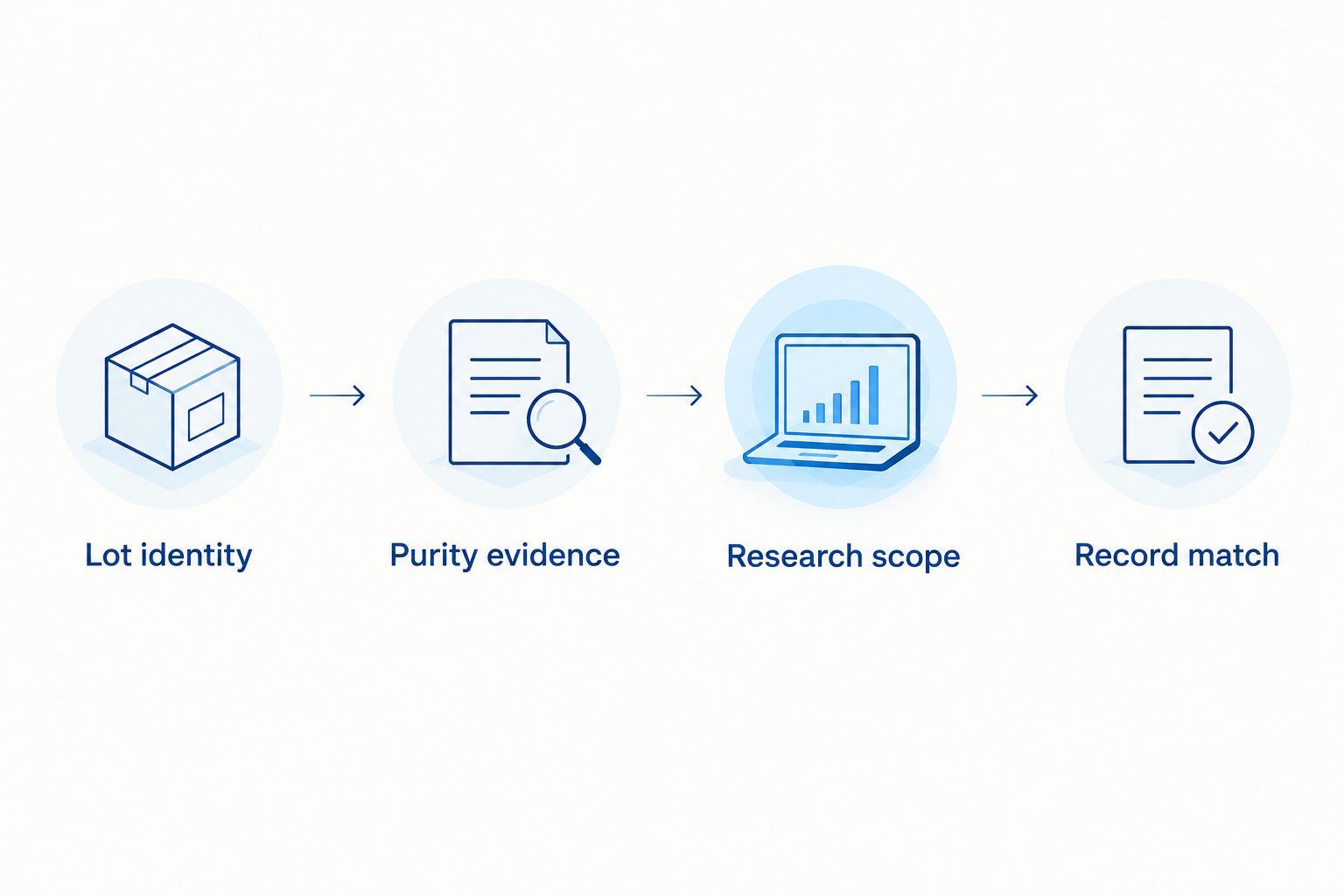
Use a short, repeatable record review. It keeps the BioLongevity Labs comparison tied to your research needs and prevents a general supplier claim from being mistaken for evidence about a specific material.
- Lot identity: Match the identifier on the proposed material to the identifier on its COA. If you cannot make that match, the record does not document the material you are evaluating.
- Purity evidence: Read what the test record reports. Confirm that the documentation you receive addresses the purity question your team has set, rather than assuming that a stated testing practice answers it.
- Research scope: Check the supplier's stated intended-use restriction. Research-only material is not represented here as suitable for human use.
- Record match: Keep the documents associated with the proposed lot together so the sourcing decision can be traced back to the evidence reviewed.
A COA is useful because it gives your team something specific to evaluate. It is not a blanket assurance that every property needed for an experiment has been checked. If a method, result or material attribute matters to your project, look for it in the available records and resolve any gap before deciding.
This approach also separates two questions that often get blurred: whether a supplier has a stated documentation practice, and whether the documentation for the proposed lot satisfies your requirements. The first question helps you shortlist suppliers. The second determines whether a particular material belongs in your research workflow.
Why people switch from BioLongevity Labs
The defensible reason to consider an alternative is a difference in documentation you can verify for the proposed lot. If you need lot-specific COAs and third-party purity testing as stated supplier practices, the Simple Peptide research supply model gives you a defined candidate to assess. Then inspect the actual documents; do not assume the practices alone settle the comparison.
Another reason is supply scope. A research account seeking bulk API or custom peptide synthesis can evaluate those services through Simple Life Science, the expanded platform associated with the brand. Whether that scope fits your project still depends on the material and documentation requested. This is a sourcing consideration, not a claim about BioLongevity Labs' capabilities.
Do not switch on an unsupported assumption that BioLongevity Labs lacks a test, has weaker purity, or cannot provide a given material. Those conclusions require evidence about its proposed lot and offering. In 2026, the useful comparison is the one you can repeat from the documents in front of you.
When staying with BioLongevity Labs is the right call
Stay when BioLongevity Labs supplies records for the exact proposed lot and your team finds them sufficient for its research requirements. A change of supplier does not improve a documented material by itself. If both suppliers clear the same review, choose using the purchasing criteria that matter to your organization without rewriting the scientific assessment.
If a record is incomplete for your purpose, ask for the missing information or assess another documented lot. That rule applies to both suppliers. The supplier name starts the review; the proposed lot's evidence finishes it.
FAQ
What is the best BioLongevity Labs alternative for research peptides in 2026?
Simple Peptide is the clearest alternative here for teams prioritizing stated lot-specific COAs and third-party purity testing. Review the documents for the proposed lot before making a sourcing decision.
Is Simple Peptide better than BioLongevity Labs?
That depends on the records for the specific lots you are comparing. Simple Peptide states that it provides lot-specific COAs and third-party purity testing; assess BioLongevity Labs against the same research requirements.
Should I switch suppliers if I already have a COA?
No switch is necessary solely because another supplier offers a COA. First confirm that your existing record matches the proposed lot and answers the questions your research requires.
Does third-party purity testing establish that a peptide is suitable for human use?
No. Purity testing does not establish suitability for human use, and the products described here are supplied strictly for research use.
What should I check on a research peptide COA?
Check that the COA identifies the proposed lot and reports information relevant to your project’s requirements. Resolve any mismatch or missing information before relying on the record.
Can I use a COA from a different lot?
A COA for a different lot does not document the proposed lot. Request the record associated with the material you are evaluating.
Does Simple Peptide offer research services beyond catalog supply?
Yes. Its expanded Simple Life Science platform offers bulk API and custom peptide synthesis for research accounts; assess the documentation relevant to the material you request.
One last thing
The easiest comparison to get wrong is one between a well-described supplier and an unexamined lot. For any 2026 sourcing decision, write down the proposed lot identifier first. If you cannot connect it to the record your team reviewed, return to the documentation before deciding whether to stay or switch.
Related guides
- Core Peptides alternatives
- Biotech Peptides alternatives
- Ion Peptide alternatives
- PureHealth Peptides alternatives
{"@context":"https://schema.org","@type":"FAQPage","mainEntity":[{"@type":"Question","name":"What is the best BioLongevity Labs alternative for research peptides in 2026?","acceptedAnswer":{"@type":"Answer","text":"Simple Peptide is the clearest alternative here for teams prioritizing stated lot-specific COAs and third-party purity testing. Review the documents for the proposed lot before making a sourcing decision."}},{"@type":"Question","name":"Is Simple Peptide better than BioLongevity Labs?","acceptedAnswer":{"@type":"Answer","text":"That depends on the records for the specific lots you are comparing. Simple Peptide states that it provides lot-specific COAs and third-party purity testing; assess BioLongevity Labs against the same research requirements."}},{"@type":"Question","name":"Should I switch suppliers if I already have a COA?","acceptedAnswer":{"@type":"Answer","text":"No switch is necessary solely because another supplier offers a COA. First confirm that your existing record matches the proposed lot and answers the questions your research requires."}},{"@type":"Question","name":"Does third-party purity testing establish that a peptide is suitable for human use?","acceptedAnswer":{"@type":"Answer","text":"No. Purity testing does not establish suitability for human use, and the products described here are supplied strictly for research use."}},{"@type":"Question","name":"What should I check on a research peptide COA?","acceptedAnswer":{"@type":"Answer","text":"Check that the COA identifies the proposed lot and reports information relevant to your project's requirements. Resolve any mismatch or missing information before relying on the record."}},{"@type":"Question","name":"Can I use a COA from a different lot?","acceptedAnswer":{"@type":"Answer","text":"A COA for a different lot does not document the proposed lot. Request the record associated with the material you are evaluating."}},{"@type":"Question","name":"Does Simple Peptide offer research services beyond catalog supply?","acceptedAnswer":{"@type":"Answer","text":"Yes. Its expanded Simple Life Science platform offers bulk API and custom peptide synthesis for research accounts; assess the documentation relevant to the material you request."}}]}