



L-Carnitine 5000MG

L-Carnitine 5000MG

$60.00

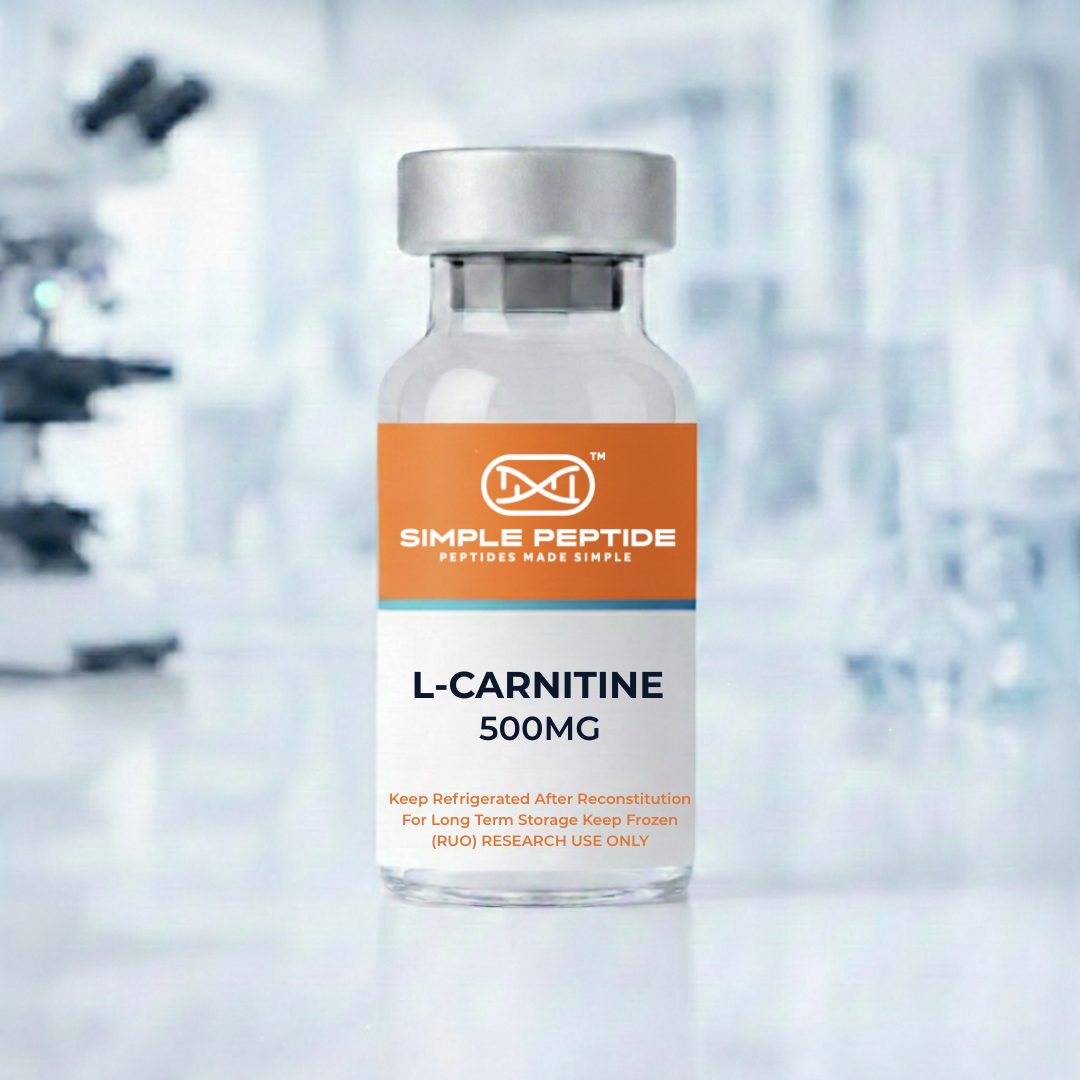
L-Carnitine 5000MG (500MG/ML) is a liquid research compound developed for controlled laboratory studies. Researchers use this formulation to examine cellular transport behavior and pathway activity under defined test conditions.

  • Used in laboratory research focused on cellular transport and pathway interaction
  • Liquid formulation supports precise handling and streamlined laboratory workflows
  • Designed for repeatable studies that require consistency and controlled conditions


Availability: In stock

Quantity Discounted Price
5 - 9 $57.00
10 + $54.00
- +

US-Based Support

US-based support available Monday - Friday 7-6pm ET

Volume Discounts

Volume Discounts available on select products

Verified Quality

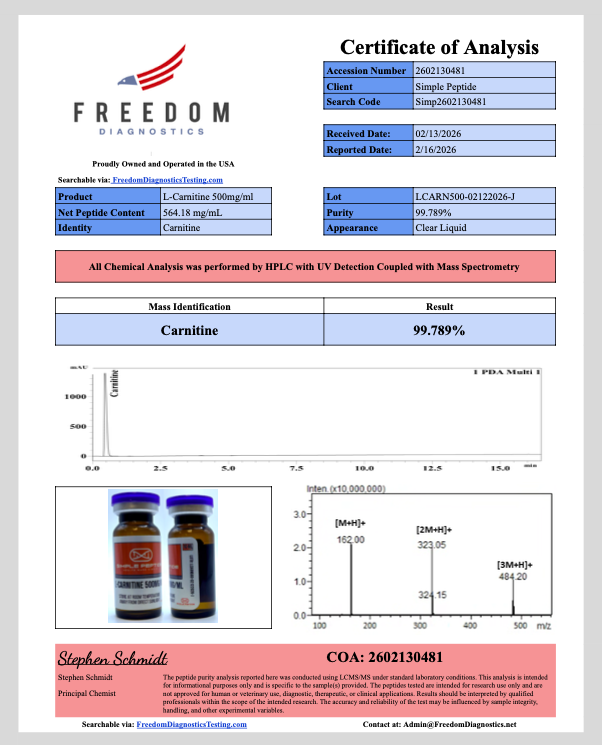
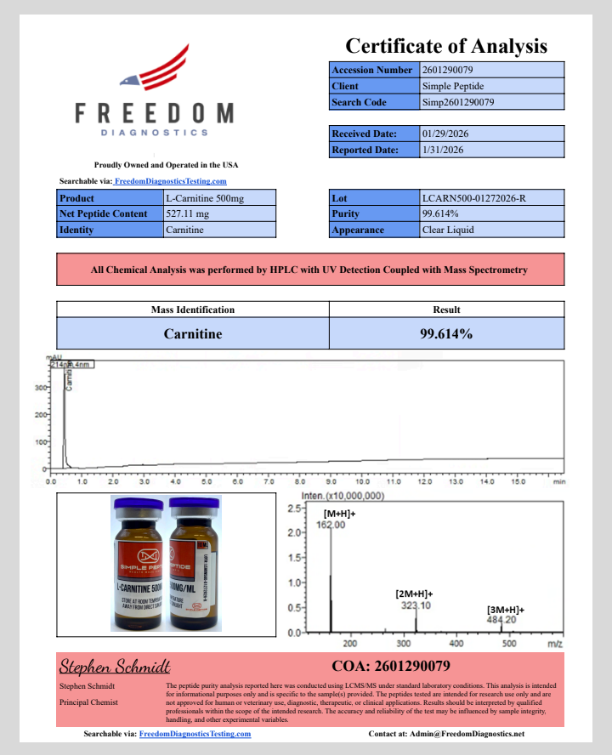
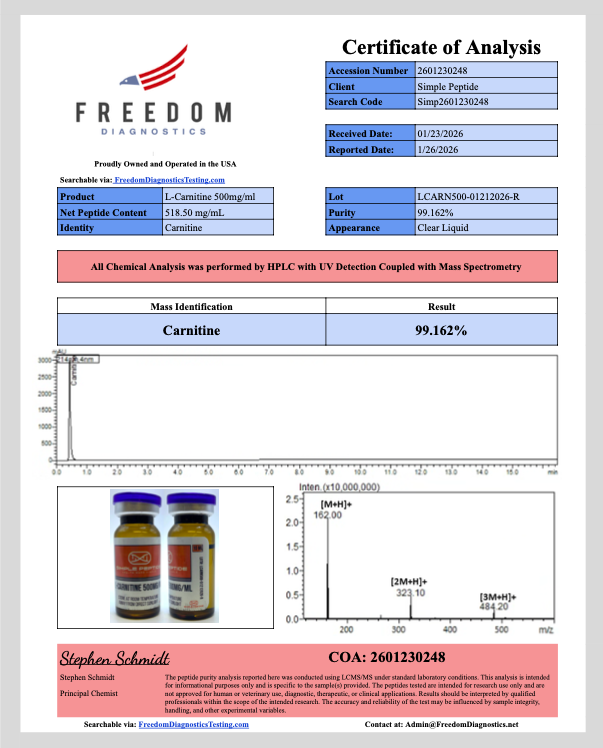
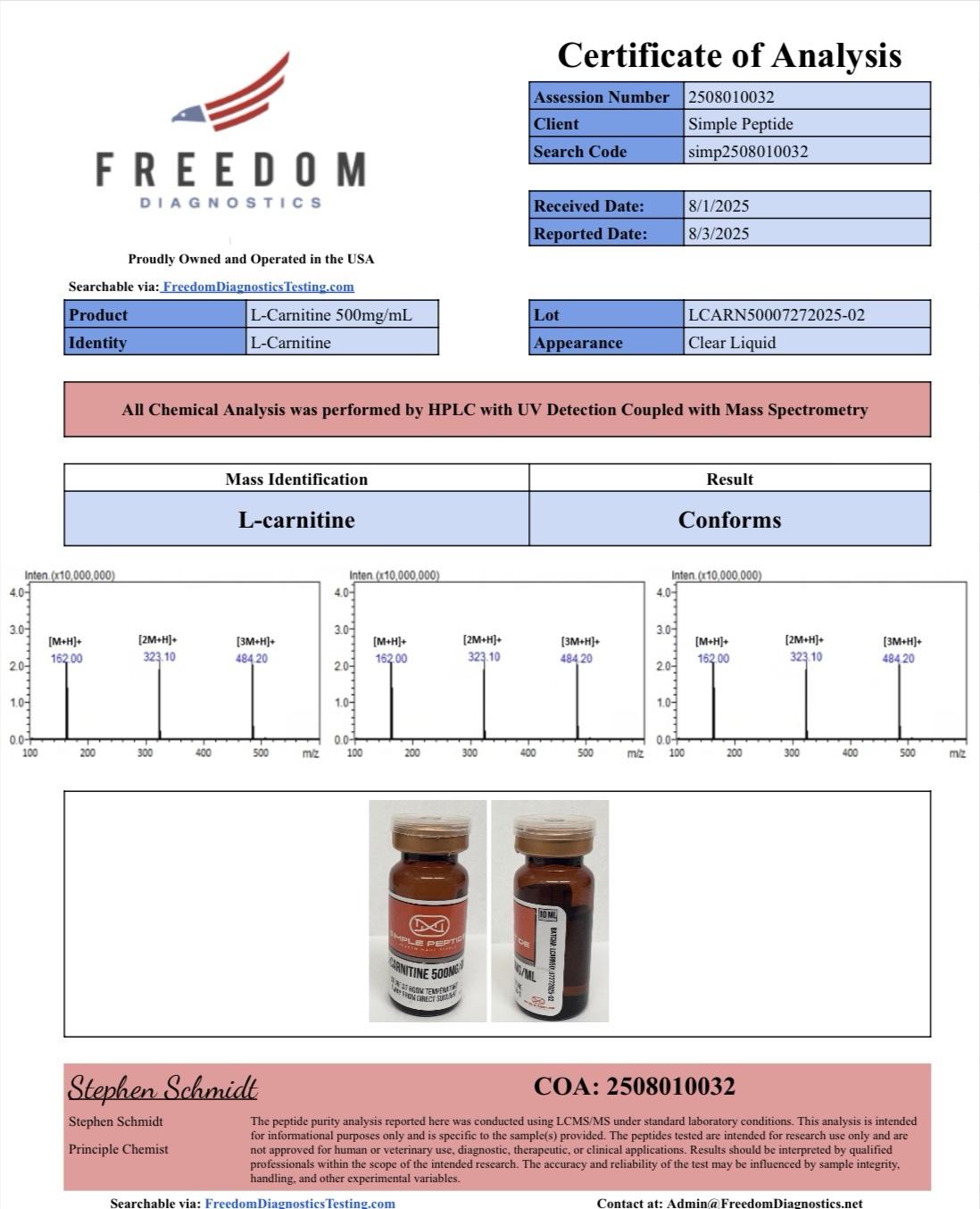
Supported by a Certificate of Analysis.

Research Focused

Intended for laboratory research applications.

L-Carnitine 5000MG (500MG/ML) for Laboratory Research

L-Carnitine 5000MG (500MG/ML) is a research compound used in controlled laboratory settings. Researchers study this amino acid derivative to better understand how cellular systems manage transport and pathway activity in non-clinical research models. Because laboratory studies rely on clear and consistent materials, this formulation supports structured and repeatable research workflows.

In laboratory environments, scientists use L-carnitine to observe how cellular processes respond under defined test conditions. As a result, laboratories include this compound in studies where accuracy, consistency, and clear data tracking are important.

Research Applications and Study Focus

In laboratory research, scientists use L-Carnitine 5000MG to explore cellular transport behavior and pathway interaction within controlled systems. These studies often focus on how molecular movement supports overall system function. Therefore, this compound fits well into research designs that examine coordinated cellular activity.

Researchers value this formulation because it offers a consistent concentration in a ready-to-use liquid format. In addition, the defined strength supports accurate handling and repeatable preparation across multiple study cycles. This consistency helps improve comparison between experiments and strengthens data quality.

Liquid Formulation and Laboratory Handling

L-Carnitine 5000MG is supplied in liquid form at a concentration of 500MG per milliliter. Researchers choose this format because it allows for precise measurement and simpler preparation during laboratory work.

By using a liquid formulation, laboratories reduce preparation steps and maintain steady workflows across repeated studies. As a result, research teams can limit variation and focus more closely on observation and analysis.

Stability and Research Consistency

The liquid format supports stable performance during ongoing laboratory research when stored under recommended conditions. Proper storage helps maintain compound integrity throughout the study period.

For this reason, laboratories often select this formulation for research that requires steady materials and repeatable test conditions over time.

Research-Only Designation and Quality Standards

L-Carnitine 5000MG is intended strictly for scientific research use and is not for human or veterinary use. Each batch meets pharmaceutical-grade quality standards to support consistent research supply.

In addition, independent testing and batch records allow researchers to review material details before use. This process supports clear data collection, structured analysis, and dependable laboratory outcomes.

No research information available for this product.

SP L Car 1:29

Peptide Research Overview

Science and Lab Equipment

Peptides are short chains of amino acids studied for their role in cellular signaling and molecular interactions. In research settings, they are commonly used to explore biological pathways and structure–function relationships.

Across scientific disciplines, peptide research supports advances in biochemistry and molecular biology. Their precision and adaptability make peptides essential tools in modern laboratory research.

Science and Lab Equipment

Key Benefits of Peptides in Research

Research Books and papers
  • Support precise investigation of cellular signaling pathways

  • Enable targeted structure–function research at the molecular level

  • Offer high specificity for controlled experimental design

  • Adapt easily across a wide range of research applications

  • Aid in studying protein interactions and biological responses

  • Allow consistent and repeatable laboratory testing

  • Integrate well with modern analytical and research methods

  • Serve as foundational tools in biochemical and molecular research

Research Books and papers

Advancing Scientific Research with Peptides

Peptides continue to serve as essential components in modern research due to their flexibility, precision, and well-defined structures. In laboratory settings, researchers rely on peptides to examine biological mechanisms, evaluate molecular interactions, and refine experimental models with a high level of control. Their scalable nature and compatibility with advanced analytical techniques make peptides valuable across both foundational studies and ongoing research development, supporting consistent, reproducible outcomes in controlled scientific environments.

Frequently Asked Questions

L-Carnitine is a naturally occurring amino acid derivative that plays a central role in energy metabolism. It is produced from the amino acids lysine and methionine and exists as a water-soluble compound in cells.

L-Carnitine plays a critical role in transporting long-chain fatty acids into the mitochondria, where they can undergo β-oxidation to generate ATP, the main energy currency of cells. This fatty acid transport system is often referred to as the carnitine shuttle.

The body synthesizes L-Carnitine endogenously, primarily in the liver and kidneys, from trimethyllysine generated during protein breakdown. It is then transported via the bloodstream to tissues such as skeletal and cardiac muscle with high energy demands.

Inside cells, L-Carnitine binds to activated long-chain fatty acids (acyl-CoA) and transports them across the inner mitochondrial membrane into the matrix. Once inside, the fatty acids are oxidized to produce energy, and the resulting products enter the tricarboxylic acid (TCA) cycle.

L-Carnitine is linked to multiple aspects of mitochondrial metabolism, including fatty acid β-oxidation, acetyl coenzyme A regulation, and metabolic flexibility. It can influence how cells prioritize fuel sources and interact with intracellular energy pathways.

Researchers study L-Carnitine because it is integral to mitochondrial energy production and fatty acid transport, key components of cellular metabolism. Its involvement in fundamental biochemical pathways makes it useful for exploring how cells manage energy supply and demand under different metabolic conditions.

Research Use Only – Legal Disclaimer

All Simple Peptide products labeled as Research Use Only (RUO) are intended strictly for laboratory, investigational, and scientific research purposes. These materials are not approved by the FDA and are not intended for human or veterinary use, clinical applications, diagnostic procedures, or therapeutic treatment of any kind.

By purchasing or using RUO materials, you acknowledge that they will be handled only within an appropriate research environment by qualified personnel who understand the risks, limitations, and regulatory requirements associated with experimental compounds. Products must not be administered to humans or animals, offered as therapeutic agents, or represented as safe or effective for any medical purpose.

Use of these materials is entirely at your own risk. Simple Peptide assumes no liability for misuse, unsafe handling, improper application, or any regulatory or compliance issues arising from their use.

Scroll to Top