

.pseo-content .pseo-table-wrap { overflow-x: auto; margin: 1.4em 0; -webkit-overflow-scrolling: touch; } .pseo-content table { width: 100% !important; border-collapse: collapse !important; table-layout: auto !important; font-size: 0.96em; } .pseo-content table th, .pseo-content table td { padding: 10px 12px !important; border-bottom: 1px solid color-mix(in srgb, currentColor 14%, transparent) !important; border-left: none !important; border-right: none !important; vertical-align: top !important; text-align: left !important; word-break: break-word !important; overflow-wrap: anywhere !important; white-space: normal !important; } .pseo-content table th { background: color-mix(in srgb, currentColor 6%, transparent) !important; color: inherit !important; font-weight: 600 !important; border-top: 1px solid color-mix(in srgb, currentColor 14%, transparent) !important; } .pseo-content table tr:last-child td { border-bottom: 1px solid color-mix(in srgb, currentColor 14%, transparent) !important; }
Gonadorelin, Kisspeptin-10, and HCG lead 2026 research catalogs built around the hypothalamic-pituitary-gonadal (HPG) axis, each targeting a different signaling point tied to testosterone production. This guide ranks five peptides referenced in current androgen-pathway literature, cataloged directly through Simple Peptide, strictly for laboratory research — no dosing guidance, no human-use claims.
- Gonadorelin ranks as the best peptide for testosterone-pathway research in 2026 among synthetic GnRH analogs.
- Kisspeptin-10 sits upstream of GnRH release and is the pick for neuroendocrine regulation research.
- HCG models Leydig cell steroidogenesis directly but is a glycoprotein hormone, not a synthesized peptide chain.
- Sermorelin and Ipamorelin address GH-axis crosstalk, not direct HPG-axis signaling.
- None of these compounds carry human dosing guidance — every listing here is for laboratory research only.
Why this matters
Testosterone-pathway research spans the hypothalamus, pituitary, and testes, and no single peptide covers all three signaling points. A lab studying GnRH pulsatility needs a different compound than one modeling Leydig cell response to LH. Confusing an androgen-adjacent peptide with a true HPG-axis peptide wastes reagent budget and muddies data.
Simple Peptide's injectable peptide research listings separate peptides by mechanism, not marketing claim, because lot-specific purity documentation only matters if the compound itself matches the pathway under study. Every peptide below carries a distinct mechanistic role — pick based on the research question, not the category name.
“A peptide is only useful to testosterone-pathway research if its mechanism matches the signaling point under study, not the category label on the bottle.”
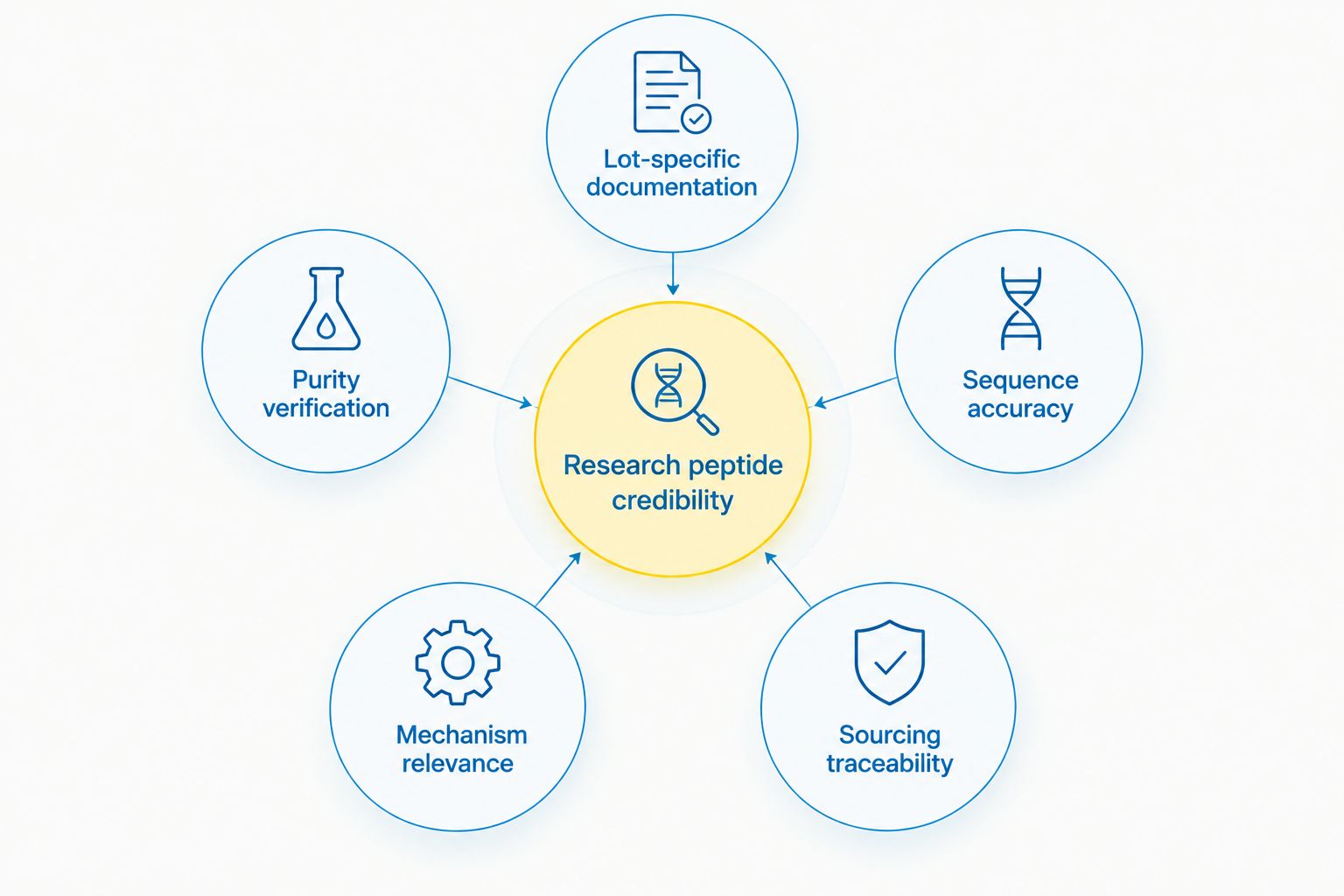
What makes a research peptide credible for testosterone-pathway studies
- Lot-specific Certificate of Analysis matching the exact batch shipped, not a generic spec sheet
- Third-party purity verification, with 98% or higher commonly cited as the baseline for reproducible in vitro and in vivo work
- Documented amino acid sequence and molecular weight consistent with published literature
- Mechanism relevance to the actual HPG-axis signaling point under study, not just androgen-adjacent marketing
- Traceable US-based manufacturing and storage-stability data
- Transparent sourcing that separates synthesized peptide chains from glycoprotein hormones like HCG
At a glance: peptides referenced in testosterone-pathway research
| Peptide | Primary research role | Standout attribute | Key limitation |
|---|---|---|---|
| Gonadorelin | HPG axis stimulation modeling | Native GnRH decapeptide sequence supports pulsatile-dosing study designs | Rapid degradation requires tightly controlled experimental timing |
| Kisspeptin-10 | Upstream GnRH-neuron regulation research | Directly triggers GnRH-neuron activity upstream of the pituitary | Limited long-term stability data in current published literature |
| HCG | Leydig cell steroidogenesis research | Structurally mimics LH receptor binding for downstream testosterone-production studies | Glycoprotein hormone, not a synthesized peptide chain, so sourcing differs |
| Sermorelin | GH-androgen crosstalk research | GHRH-receptor agonist used in combined endocrine-axis study designs | Acts on the GH axis, only indirectly relevant to testosterone pathways |
| Ipamorelin | Selective GH secretagogue research | High GH-receptor selectivity with minimal cortisol/prolactin cross-activity reported | Same indirect relevance limitation as Sermorelin for direct androgen research |
1. Gonadorelin: best research peptide for HPG axis stimulation studies
Gonadorelin is a synthetic decapeptide identical in sequence to native gonadotropin-releasing hormone (GnRH). Researchers use it in vitro and in vivo to trigger pulsatile LH and FSH release from the pituitary, the same mechanism that ultimately drives testicular testosterone output. Because its sequence mirrors endogenous GnRH, it is the most literature-anchored compound for modeling HPG-axis dynamics in 2026 studies.
Gonadorelin pros:
- Matches native GnRH sequence, minimizing off-target signaling in receptor-binding assays
- Short half-life supports pulsatile-dosing study designs that mimic physiological GnRH release
- Extensive existing literature on GnRH receptor pharmacology to benchmark new findings against
- Available with lot-specific Certificate of Analysis and third-party purity testing
Gonadorelin cons:
- Rapid degradation demands tightly controlled timing and storage during experiments
- Pulsatile-release study designs require more complex protocols than single-dose models
Best for: HPG axis stimulation and pulsatile-release modeling.
Verdict: Research-grade buy for labs studying LH/FSH release mechanics in 2026.
2. Kisspeptin-10: best research peptide for upstream GnRH-neuron regulation
Kisspeptin-10 acts one step upstream of Gonadorelin, activating the neurons that trigger GnRH release in the first place. It is used in neuroendocrine research to study how the brain initiates the signaling cascade that eventually reaches the testes. Where Gonadorelin models the pituitary side of the axis, Kisspeptin-10 models the hypothalamic trigger.
Kisspeptin-10 pros:
- Targets GnRH neurons directly, useful for studying the initiating step of the HPG cascade
- Distinct mechanism from Gonadorelin, allowing side-by-side pathway-mapping studies
- Growing 2026 research interest gives novel findings more publication value
Kisspeptin-10 cons:
- Less long-term stability data published compared to older GnRH analogs
- Requires pairing with a downstream marker, like an LH assay, to confirm cascade activation
Best for: Upstream neuroendocrine regulation research.
Verdict: Research buy for labs mapping the hypothalamic trigger point; hold if the study only needs pituitary-level data.
3. HCG: best research peptide for Leydig cell steroidogenesis studies
Human chorionic gonadotropin (HCG) binds the same receptor as luteinizing hormone, directly stimulating Leydig cells to produce testosterone. It is the compound researchers reach for when the study question is steroidogenesis itself, not upstream signaling. HCG is technically a glycoprotein hormone rather than a synthesized peptide chain, which changes how it is sourced and characterized compared to Gonadorelin or Kisspeptin-10.
HCG pros:
- Directly stimulates the same receptor LH uses, the closest proxy for downstream testosterone-production research
- Long-standing use in reproductive endocrinology research gives a deep comparative literature base
- Lot-specific documentation available for sourcing traceability
HCG cons:
- Not a synthesized peptide chain, so sequence-verification methods differ from the other compounds on this list
- Receptor cross-reactivity with LH complicates isolating pure HCG effects in some assay designs
Best for: Leydig cell steroidogenesis and downstream testosterone-production research.
Verdict: Research buy for labs studying testosterone output at the gonadal level.
4. Sermorelin: best research peptide for GH-androgen crosstalk studies
Sermorelin is a GHRH-receptor agonist, not a direct HPG-axis compound. Researchers include it in testosterone-adjacent studies specifically to examine how growth-hormone signaling interacts with androgen pathways, since the two axes cross-talk in muscle and bone-tissue research. It belongs on this list because of that crosstalk relevance, not because it acts on LH, FSH, or GnRH receptors.
Sermorelin pros:
- Well-characterized GHRH-receptor mechanism with decades of endocrinology literature behind it
- Useful for combined-axis study designs pairing GH and androgen signaling readouts
- Documented purity and sequence data available with lot-specific COA
Sermorelin cons:
- Acts on the GH axis, so it does not model HPG-axis testosterone signaling on its own
- Requires a second HPG-specific peptide in the same protocol to draw testosterone-pathway conclusions
Best for: GH-axis and androgen-pathway crosstalk studies, not primary testosterone signaling.
Verdict: Skip if the research question is testosterone-specific; research buy for combined-axis designs.
5. Ipamorelin: best research peptide for selective GH secretagogue research
Ipamorelin is a GH secretagogue prized in research settings for its receptor selectivity, with published data showing minimal cortisol and prolactin cross-activity compared to older GHRP compounds. Like Sermorelin, it sits on the GH axis rather than the HPG axis, so its relevance to testosterone research is indirect, through anabolic-pathway crosstalk studies rather than direct LH/FSH signaling.
Ipamorelin pros:
- High GH-receptor selectivity reduces confounding variables in crosstalk study designs
- Complements existing Sermorelin or CJC-1295 protocols already in use in anabolic-pathway literature
- Third-party purity testing and lot-specific documentation available
Ipamorelin cons:
- Same indirect relevance limitation as Sermorelin — it does not act on HPG-axis receptors
- Best used alongside a GnRH- or LH-pathway peptide, not as a standalone testosterone-research compound
Best for: Anabolic-pathway crosstalk research alongside GH secretagogues.
Verdict: Skip as a standalone testosterone-pathway peptide; research buy for paired GH/androgen crosstalk protocols.
Browse research-grade peptide catalog
Lot-specific COAs and third-party purity testing on every listing.
How this ranking works
Each peptide above is scored against the six criteria listed earlier: lot-specific documentation, purity verification, sequence accuracy, mechanism relevance to the HPG axis, sourcing traceability, and — for HCG specifically — transparency about its glycoprotein structure versus a synthesized chain. Gonadorelin ranks first because its sequence identity to native GnRH gives it the most direct mechanism relevance of any compound on this list.
Kisspeptin-10 and HCG follow because they map to adjacent points on the same axis. Sermorelin and Ipamorelin rank lower for this specific use case because their primary mechanism sits on the GH axis, not the HPG axis — they earn a place only through documented crosstalk research.
Which peptide should your research default to in 2026?
If the study question is HPG-axis signaling broadly, Gonadorelin is the default anchor compound in 2026 given its sequence identity to native GnRH and the depth of existing receptor-pharmacology literature. If the question sits further upstream, at the hypothalamic trigger, Kisspeptin-10 is the correct substitution. If the question is steroidogenesis itself, at the Leydig cell level, HCG is the closer mechanistic match, with the caveat that it is a glycoprotein hormone and not a synthesized peptide chain. Sermorelin and Ipamorelin only belong in the protocol when the study explicitly examines GH-androgen crosstalk.
None of this is dosing guidance. Every compound listed here is supplied strictly for laboratory research use, not for human administration, and Certificates of Analysis are lot-specific rather than general-spec documents for exactly that reason.
FAQ
What is the best peptide for testosterone-pathway research in 2026?
Gonadorelin ranks as the best peptide for testosterone-pathway research in 2026 because its sequence matches native GnRH and directly triggers the LH/FSH release studied throughout HPG-axis literature. Kisspeptin-10 and HCG are the next-best options depending on which point in the axis the study targets.
Is Kisspeptin-10 better than Gonadorelin for HPG axis studies?
Neither is universally better. Kisspeptin-10 models the hypothalamic trigger that initiates GnRH release, while Gonadorelin models the pituitary-level GnRH signal itself, so the choice depends on which signaling point the research question targets.
Can research peptides be used to increase testosterone in humans?
No. Every peptide on this list is supplied strictly for laboratory research use, not for human administration, and none of the entries here include dosing guidance for that reason.
What’s the difference between HCG and synthetic GnRH analogs like Gonadorelin?
HCG is a glycoprotein hormone that binds the LH receptor directly, while Gonadorelin is a synthesized peptide chain identical to native GnRH. That structural difference changes how each is sourced, characterized, and documented.
Do Sermorelin and Ipamorelin affect testosterone directly?
No, both act on the growth-hormone axis rather than the HPG axis, so their relevance to testosterone research is indirect and limited to crosstalk study designs. They are typically paired with an HPG-axis peptide when testosterone signaling is the actual research question.
What purity standard should a testosterone-pathway research peptide meet?
Most research protocols cite third-party purity verification at or above 98% as the baseline for reproducible results. A lot-specific Certificate of Analysis matching the exact batch shipped matters more than a generic spec sheet.
Are these peptides approved for human use in 2026?
No. All five peptides in this guide are research chemicals intended strictly for laboratory use, and none carry human-use approval or usage instructions.
One last thing
HCG is the outlier on this list for a reason worth remembering: it is the only compound here that is not a synthesized peptide chain. Treating it identically to Gonadorelin or Kisspeptin-10 in a sourcing or characterization protocol is the most common mismatch researchers make when building a testosterone-pathway study in 2026.
Related guides
- Best peptide stacks for bodybuilding
- Best peptides for anti-aging and longevity
- Best peptides for muscle growth
{"@context":"https://schema.org","@type":"FAQPage","mainEntity":[{"@type":"Question","name":"What is the best peptide for testosterone-pathway research in 2026?","acceptedAnswer":{"@type":"Answer","text":"Gonadorelin ranks as the best peptide for testosterone-pathway research in 2026 because its sequence matches native GnRH and directly triggers the LH/FSH release studied throughout HPG-axis literature. Kisspeptin-10 and HCG are the next-best options depending on which point in the axis the study targets."}},{"@type":"Question","name":"Is Kisspeptin-10 better than Gonadorelin for HPG axis studies?","acceptedAnswer":{"@type":"Answer","text":"Neither is universally better. Kisspeptin-10 models the hypothalamic trigger that initiates GnRH release, while Gonadorelin models the pituitary-level GnRH signal itself, so the choice depends on which signaling point the research question targets."}},{"@type":"Question","name":"Can research peptides be used to increase testosterone in humans?","acceptedAnswer":{"@type":"Answer","text":"No. Every peptide on this list is supplied strictly for laboratory research use, not for human administration, and none of the entries here include dosing guidance for that reason."}},{"@type":"Question","name":"What's the difference between HCG and synthetic GnRH analogs like Gonadorelin?","acceptedAnswer":{"@type":"Answer","text":"HCG is a glycoprotein hormone that binds the LH receptor directly, while Gonadorelin is a synthesized peptide chain identical to native GnRH. That structural difference changes how each is sourced, characterized, and documented."}},{"@type":"Question","name":"Do Sermorelin and Ipamorelin affect testosterone directly?","acceptedAnswer":{"@type":"Answer","text":"No, both act on the growth-hormone axis rather than the HPG axis, so their relevance to testosterone research is indirect and limited to crosstalk study designs. They are typically paired with an HPG-axis peptide when testosterone signaling is the actual research question."}},{"@type":"Question","name":"What purity standard should a testosterone-pathway research peptide meet?","acceptedAnswer":{"@type":"Answer","text":"Most research protocols cite third-party purity verification at or above 98% as the baseline for reproducible results. A lot-specific Certificate of Analysis matching the exact batch shipped matters more than a generic spec sheet."}},{"@type":"Question","name":"Are these peptides approved for human use in 2026?","acceptedAnswer":{"@type":"Answer","text":"No. All five peptides in this guide are research chemicals intended strictly for laboratory use, and none carry human-use approval or usage instructions."}}]}