
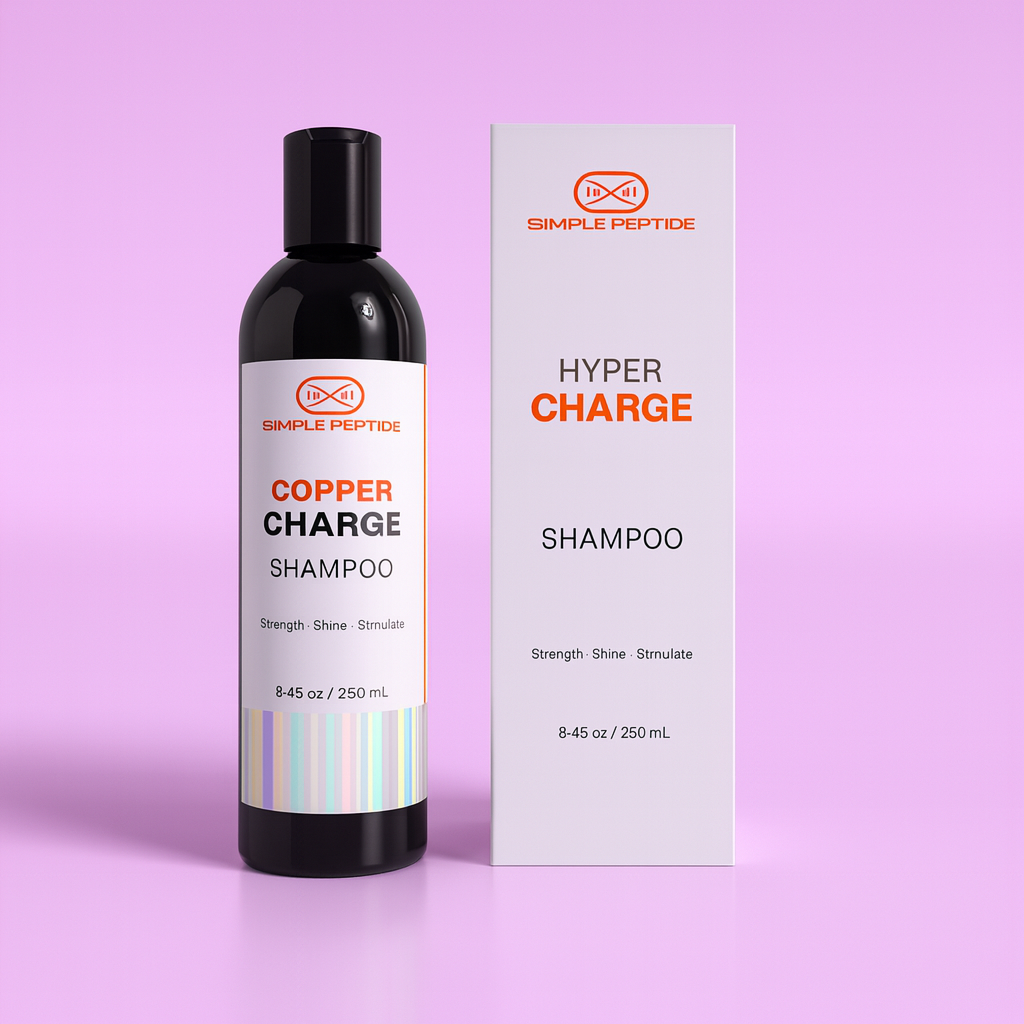




Hypercharge Shampoo Copper Charge Formula
The Hypercharge Shampoo Copper Charge Formula is designed for laboratory research that focuses on peptide based topical cleansing systems. It gives researchers a stable, sulfate free base that makes it easier to study how peptide rich blends behave on keratin samples and scalp model environments. Because the formula stays consistent from batch to batch, researchers can track changes in peptide delivery, surface renewal, hydration levels, and cleansing action with more accuracy.
This Hypercharge Shampoo uses a peptide centered structure that supports a wide range of topical research projects. Copper Tripeptide 1, Biotin, and Niacinamide form the core of the formula. Researchers often choose these ingredients when they study keratin strength, surface balance, or structural response in hair model systems. Each ingredient offers a clear variable, and together they help scientists observe how peptide systems interact with other compounds in the formula.
Panthenol adds another important layer for laboratory studies. It helps teams look at moisture retention, fiber flexibility, and overall resilience in controlled settings. Its behavior in topical solutions gives researchers useful data when they study hydration mechanics or fiber movement.
The formula also includes Ginger Root Extract, Rice Ferment, Avena Sativa Protein, and Polygonum Multiflorum Root Extract. These natural components bring extra research variables that relate to nourishment, breakage resistance, pigmentation behavior, and texture support. Each ingredient offers another point of observation that helps labs build a deeper understanding of how topical systems work.
The Hypercharge Shampoo Copper Charge Formula gives laboratories a dependable tool for examining peptide based cleansing and hydration. It performs in a predictable way, which helps researchers gather consistent data across multiple tests. Because the formula supports studies on structure, moisture balance, and peptide delivery, it works well for scientists who focus on topical peptide development. This makes it a strong option for teams that want to advance studies in keratin model systems, surface behavior, or peptide enhanced formula design.