




GHRP-2 Research Peptide
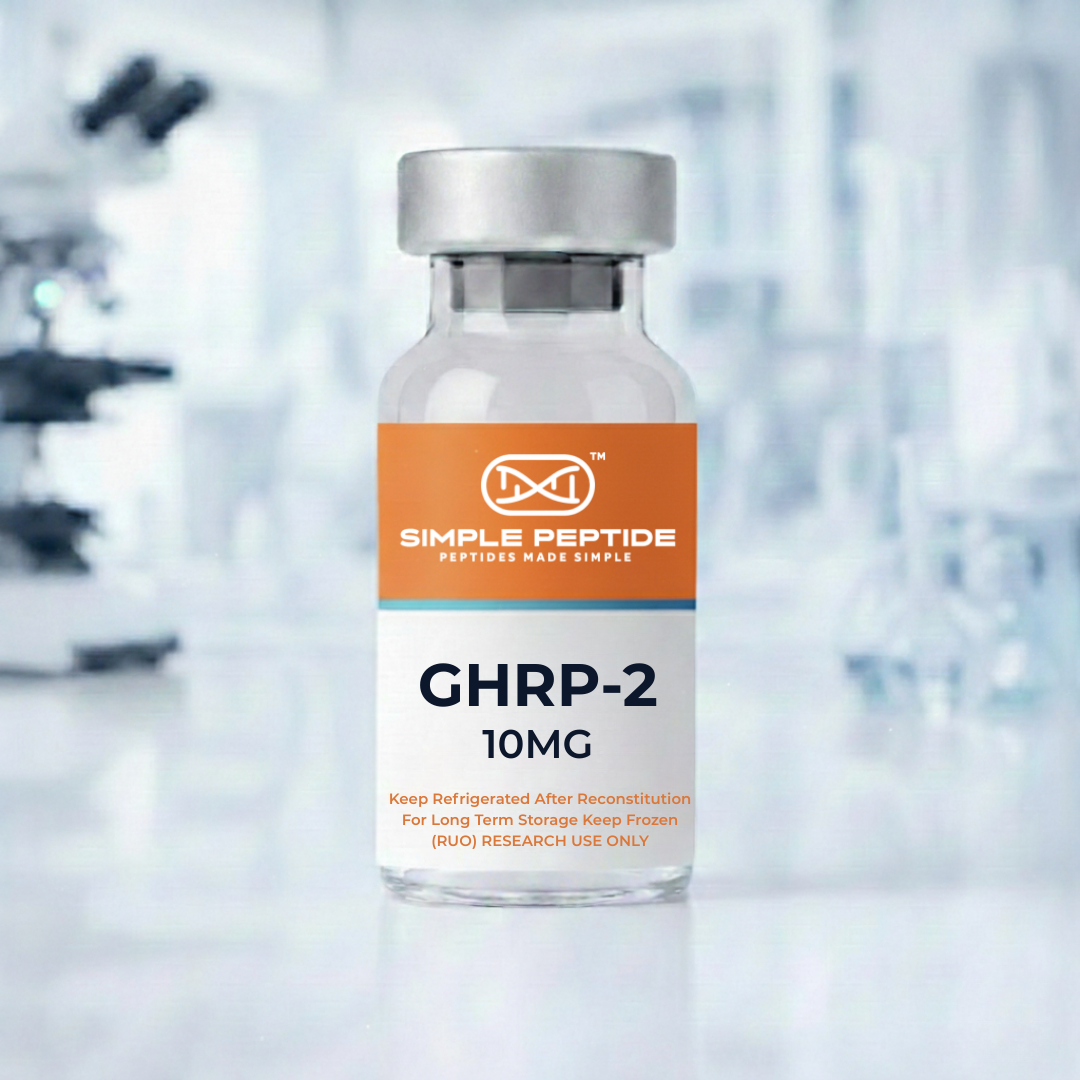
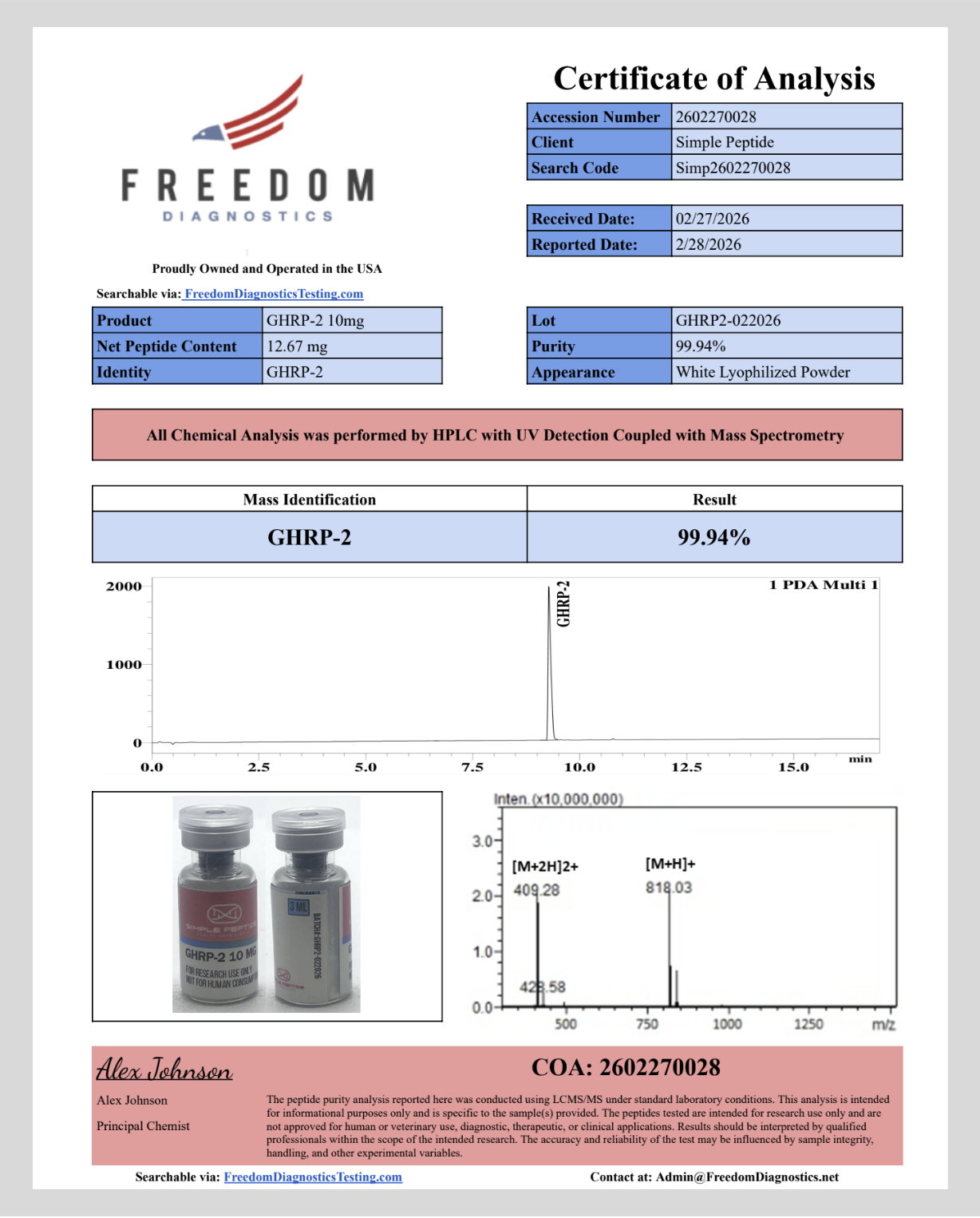
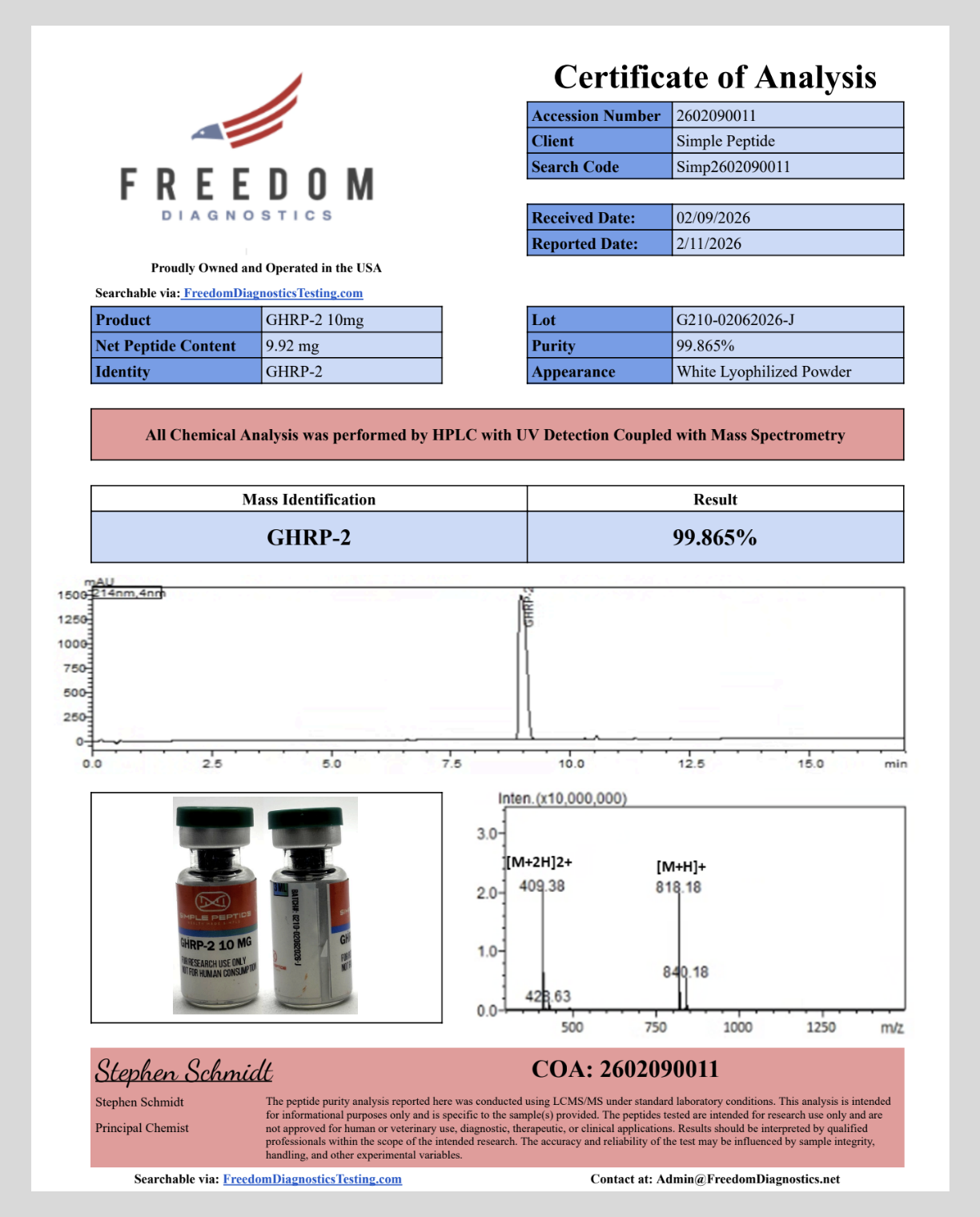
GHRP-2, also known as KP 102, is a synthetic hexapeptide classified as a Growth Hormone Releasing Peptide (GHRP). Researchers study this peptide in controlled laboratory environments as part of structured research focused on peptide signaling, receptor interaction models, and structure based peptide analysis. Its synthetic hexapeptide structure allows laboratories to work with a clearly defined compound under standardized research conditions.
Because GHRP-2 belongs to the GHRP class, researchers use it to explore how specific peptide sequences interact within experimental systems. This focused approach helps research teams examine peptide behavior and signaling patterns while maintaining precise control over experimental variables. As a result, laboratories can generate consistent and repeatable data across multiple study phases.
In laboratory settings, scientists handle GHRP-2 using standard peptide preparation and safety procedures. The peptide format supports accurate measurement and controlled application during experiments. Therefore, research teams can maintain stable testing conditions and focus on observation, documentation, and data analysis.
Researchers value GHRP-2 for its defined hexapeptide structure and compatibility with structured research workflows. Its consistency helps reduce variability during experimentation and supports comparison across studies involving related peptide analogs. In addition, its stable composition makes it suitable for long term laboratory projects that require dependable research materials.
Ongoing scientific research continues to include GHRP-2 in peptide focused laboratory studies. Its synthetic origin, clearly defined structure, and predictable handling characteristics make it a useful tool for advanced experimental research.
Important Notice
GHRP-2 is provided strictly for research use only. This product is not intended for human or animal use, clinical applications, diagnostic procedures, or consumption of any kind. All research must be conducted by qualified professionals in appropriate laboratory environments and in compliance with applicable regulations and guidelines.