
GHK-CU 100MG
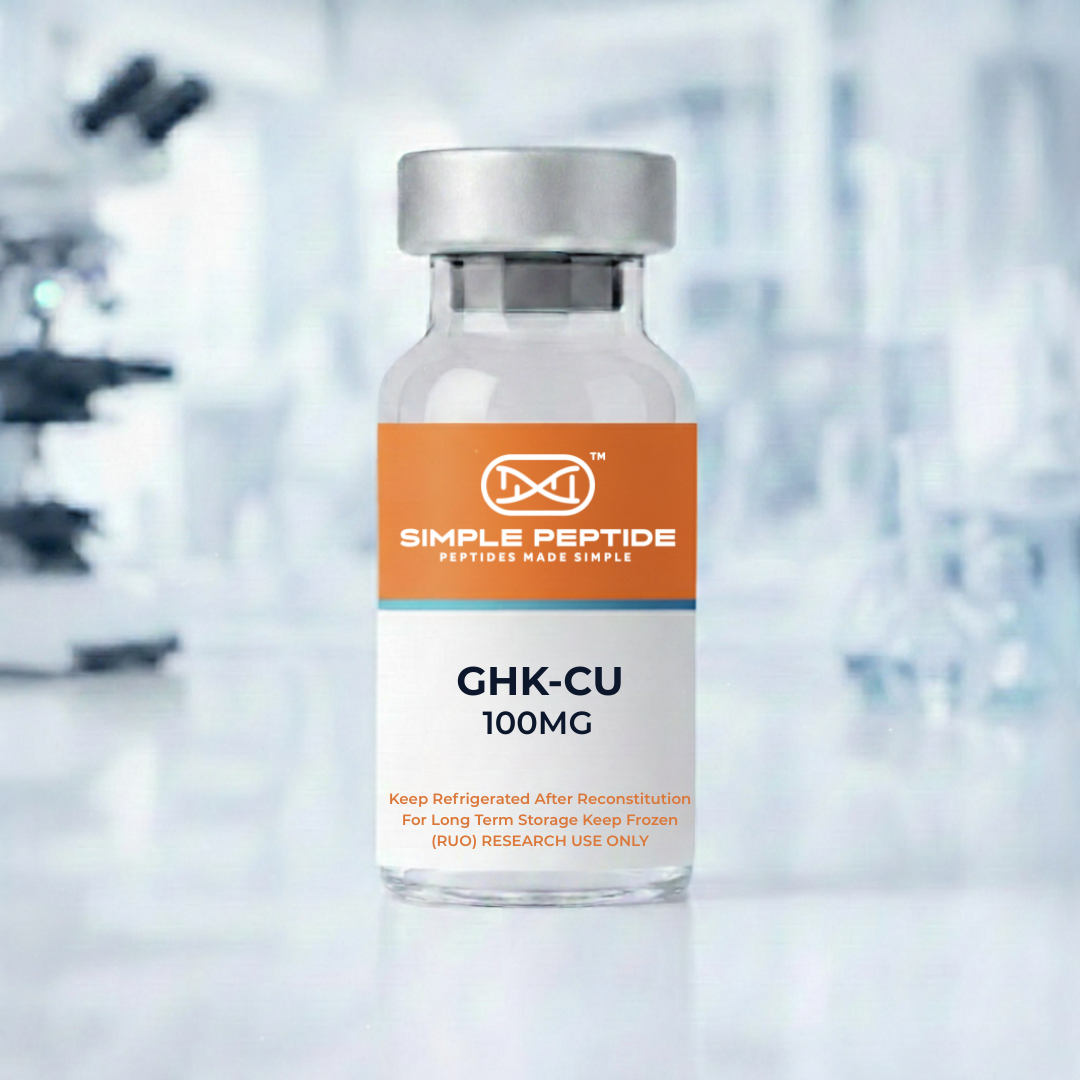



GHK-CU 100MG
$55.00
GHK-Cu is a naturally occurring copper peptide studied in controlled laboratory environments. Researchers use this compound in structured studies focused on peptide signaling and copper binding behavior.
- Naturally occurring copper polypeptide found in biological systems
- Studied in laboratory research focused on peptide and copper interactions
- Suitable for controlled and repeatable research workflows
Availability: In stock
| Title | Quantity | Discounted Price |
|---|---|---|
| Bulk Discount | 5 - 9 | 5% $52.25 |
| Bulk Discount | 10 + | 10% $49.50 |

US-Based Support
US-based support available Monday - Friday 7-6pm ET
Volume Discounts
Volume Discounts available on select products

Verified Quality
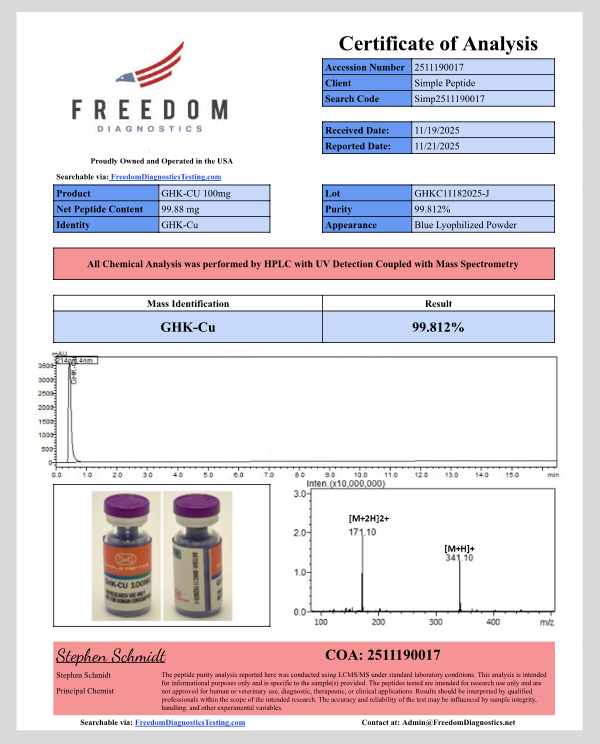
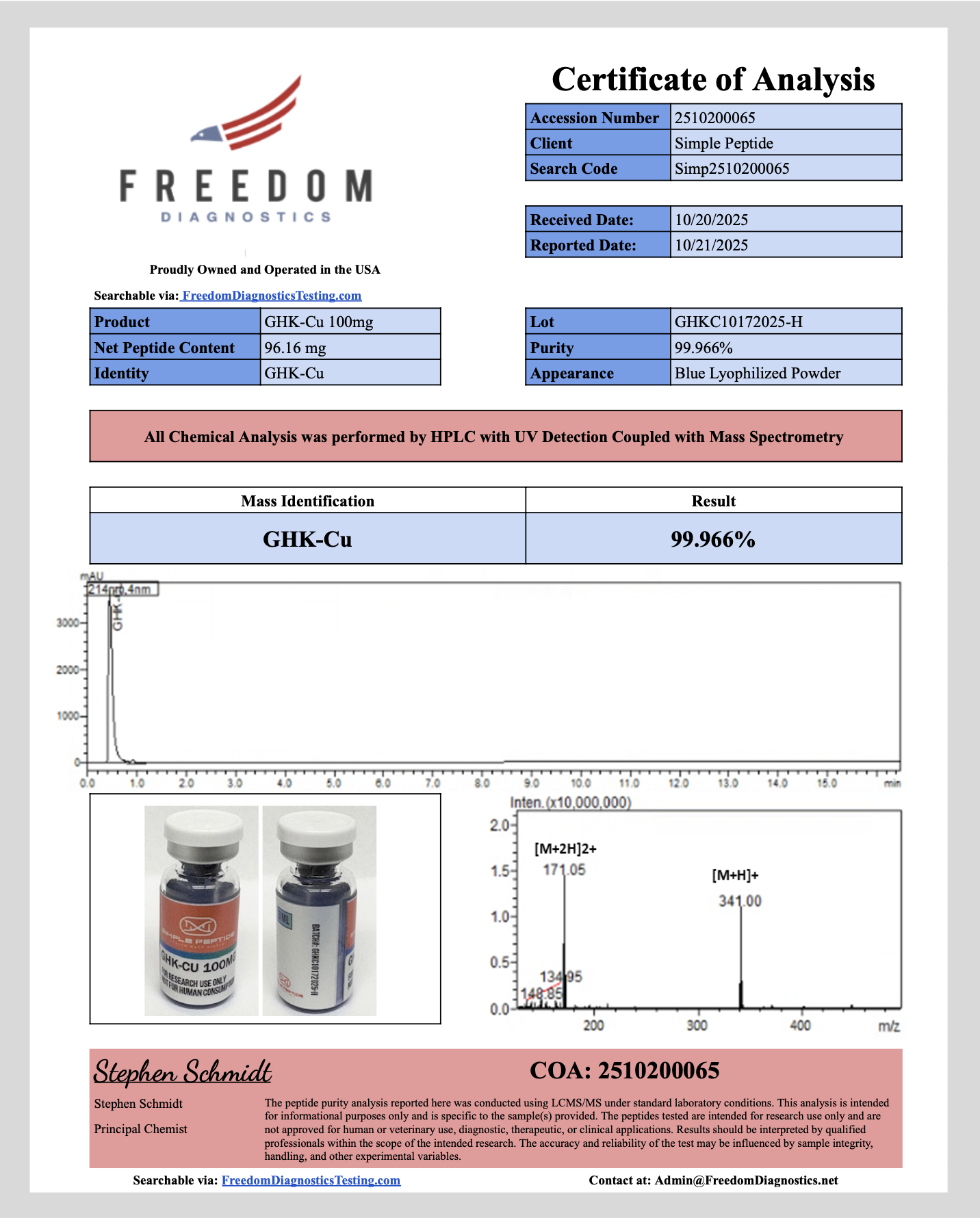
Supported by a Certificate of Analysis.
Research Focused
Intended for laboratory research applications.
GHK-Cu Research Peptide
GHK-Cu is a naturally occurring copper polypeptide found in blood plasma and saliva. Researchers study this peptide in controlled laboratory environments as part of structured research focused on peptide signaling, copper binding behavior, and molecular interaction models. Its defined peptide structure and copper complex make it suitable for repeatable studies under standardized research conditions.
Because GHK-Cu exists naturally in biological systems, researchers use it to explore how copper bound peptides behave in experimental models. This research helps teams examine peptide and metal interactions while maintaining precise control over laboratory variables. As a result, laboratories can generate consistent and reliable data across multiple study phases.
In laboratory settings, scientists handle GHK-Cu using standard peptide preparation and safety procedures. The peptide format supports accurate measurement and controlled application during experiments. Therefore, research teams can maintain stable testing conditions and focus on observation, documentation, and data analysis.
Researchers value GHK-Cu for its clear structure and compatibility with structured research workflows. Its consistent composition helps reduce variation during experimentation and supports comparison across studies involving copper peptide complexes. In addition, its predictable handling characteristics make it suitable for long term laboratory projects that require dependable research materials.
Ongoing scientific research continues to include GHK-Cu in peptide focused laboratory studies. Its natural origin, defined structure, and suitability for controlled research models make it a useful tool for advanced experimental work.
Important Notice
GHK-Cu is provided strictly for research use only. This product is not intended for human or animal use, clinical applications, diagnostic procedures, or consumption of any kind. All research must be conducted by qualified professionals in appropriate laboratory environments and in compliance with applicable regulations and guidelines.
No research information available for this product.
Certificate of Analysis
Peptide Research Overview

Peptides are short chains of amino acids studied for their role in cellular signaling and molecular interactions. In research settings, they are commonly used to explore biological pathways and structure–function relationships.
Across scientific disciplines, peptide research supports advances in biochemistry and molecular biology. Their precision and adaptability make peptides essential tools in modern laboratory research.
Key Benefits of Peptides in Research

Support precise investigation of cellular signaling pathways
Enable targeted structure–function research at the molecular level
Offer high specificity for controlled experimental design
Adapt easily across a wide range of research applications
Aid in studying protein interactions and biological responses
Allow consistent and repeatable laboratory testing
Integrate well with modern analytical and research methods
Serve as foundational tools in biochemical and molecular research
Advancing Scientific Research with Peptides

Peptides continue to serve as essential components in modern research due to their flexibility, precision, and well-defined structures. In laboratory settings, researchers rely on peptides to examine biological mechanisms, evaluate molecular interactions, and refine experimental models with a high level of control. Their scalable nature and compatibility with advanced analytical techniques make peptides valuable across both foundational studies and ongoing research development, supporting consistent, reproducible outcomes in controlled scientific environments.
Frequently Asked Questions
GHK-Cu is a naturally occurring peptide complex consisting of the tripeptide glycyl-L-histidyl-L-lysine bound to a copper ion. It was first isolated from human plasma and has a strong affinity for binding copper(II) ions.
The tripeptide GHK binds copper ions via its histidine residue and other backbone nitrogens, forming a stable complex. This copper-bound form, GHK-Cu, is water soluble and capable of interacting with biological systems at a molecular level.
In laboratory and animal studies, GHK-Cu has been shown to influence pathways related to collagen synthesis, tissue repair, wound healing, and extracellular matrix remodeling by interacting with fibroblasts and stimulating the production of structural proteins.
Scientific literature documents that GHK-Cu can modulate gene expression and signaling pathways involved in inflammation, antioxidant responses, and tissue remodeling, including effects on collagen, elastin, and glycosaminoglycan production.
GHK-Cu has been studied in in vitro and animal models to explore its roles in wound healing, skin regeneration, and modulation of inflammatory pathways. Some research extends into other organ systems where tissue repair and oxidative stress regulation are of interest.
Researchers are interested in GHK-Cu because it combines a small peptide with copper binding, enabling it to influence signaling pathways for tissue repair, extracellular matrix production, and gene regulation, making it a useful tool for studying complex biological responses to injury and stress.
Research Use Only – Legal Disclaimer
All Simple Peptide products labeled as Research Use Only (RUO) are intended strictly for laboratory, investigational, and scientific research purposes. These materials are not approved by the FDA and are not intended for human or veterinary use, clinical applications, diagnostic procedures, or therapeutic treatment of any kind.
By purchasing or using RUO materials, you acknowledge that they will be handled only within an appropriate research environment by qualified personnel who understand the risks, limitations, and regulatory requirements associated with experimental compounds. Products must not be administered to humans or animals, offered as therapeutic agents, or represented as safe or effective for any medical purpose.
Use of these materials is entirely at your own risk. Simple Peptide assumes no liability for misuse, unsafe handling, improper application, or any regulatory or compliance issues arising from their use.