




CJC-1295 w/ DAC 5MG for Laboratory Research
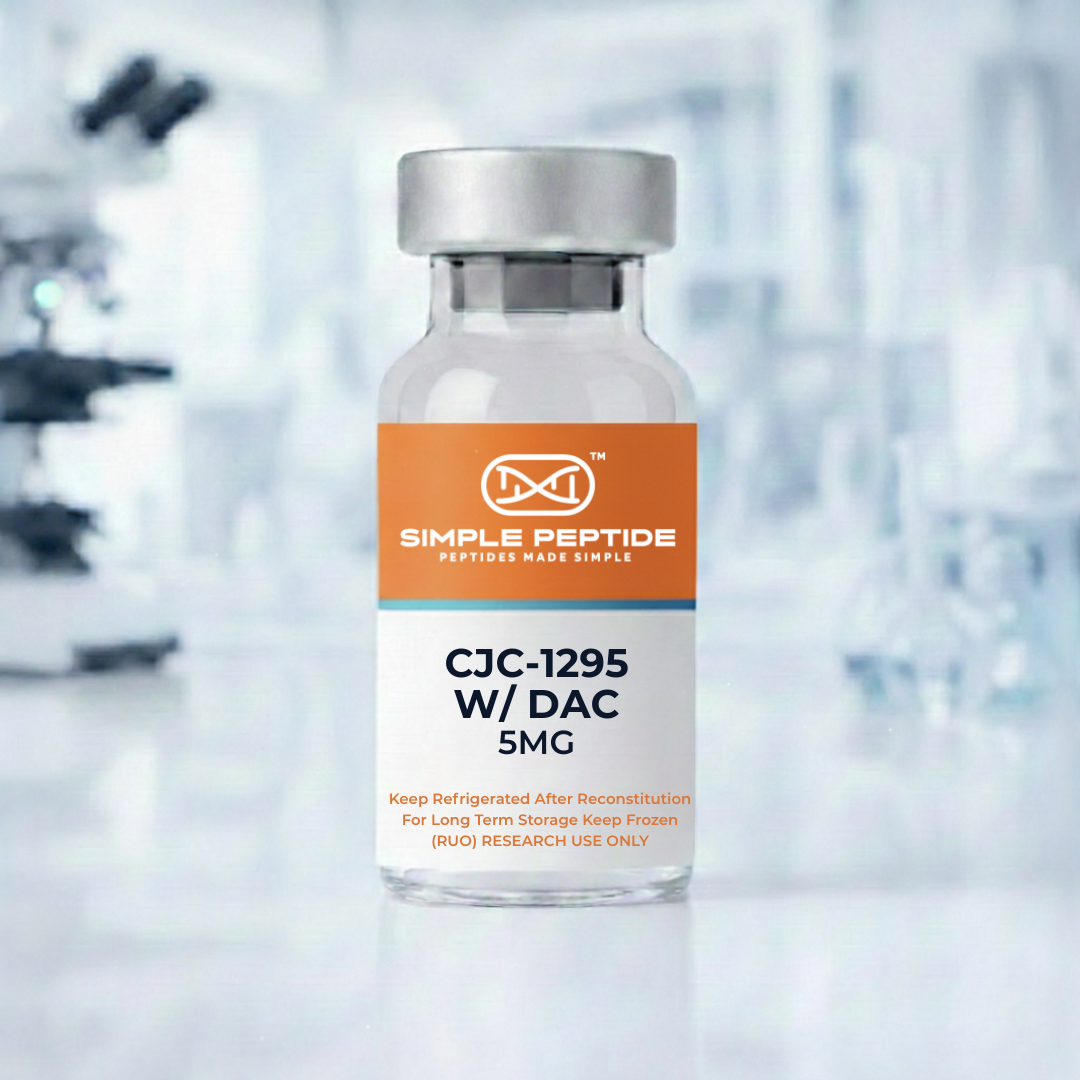
CJC-1295 w/ DAC 5MG, also known as DAC:GRF, is a synthetic peptide developed for controlled laboratory research. Researchers study this compound as an analog of growth hormone-releasing hormone (GHRH), also referred to as growth hormone-releasing factor (GRF). Because of its modified structure, this formulation supports research focused on extended peptide activity within non-clinical models.
CJC-1295 w/ DAC shares the same 29-amino acid peptide backbone as CJC-1295 without DAC. However, this version includes an added chemical modification known as the Drug Affinity Complex, or DAC. This modification plays a key role in how the peptide behaves in laboratory research settings.
Role of the Drug Affinity Complex (DAC)
The Drug Affinity Complex allows CJC-1295 w/ DAC to bind to serum albumin under research conditions. As a result, researchers observe prolonged peptide presence compared to non-DAC formulations. This extended interaction makes the compound useful in studies that examine peptide stability and sustained signaling behavior over time.
Because of this property, laboratories often select DAC-modified peptides when research designs require longer observation windows. The DAC structure helps researchers reduce variability associated with rapid peptide breakdown during controlled experiments.
Research Applications and Study Focus
In laboratory research, scientists use CJC-1295 w/ DAC to study peptide signaling patterns and duration-related behavior within defined experimental systems. These studies often focus on how structural modifications influence peptide persistence rather than immediate response.
Researchers value this compound because its extended activity supports research designs that rely on fewer preparation steps and more consistent experimental timing. As a result, laboratories can compare data across study cycles with improved clarity.
Compound Formulation and Laboratory Handling
CJC-1295 w/ DAC 5MG is supplied as a lyophilized powder intended for laboratory preparation. Researchers reconstitute the material according to internal laboratory protocols prior to experimental use. This format supports compound stability and consistent handling across research workflows.
By following standardized preparation methods, laboratories help maintain compound integrity and support repeatable experimental conditions.
Storage and Stability Considerations
Laboratories store the lyophilized compound in a cool, dry place away from light to preserve stability. After reconstitution, researchers refrigerate the solution for short-term use. For longer-term storage, freezing at minus 20 degrees Celsius helps maintain material integrity.
Proper storage supports consistent compound behavior throughout extended research periods.
Research-Only Designation and Quality Standards
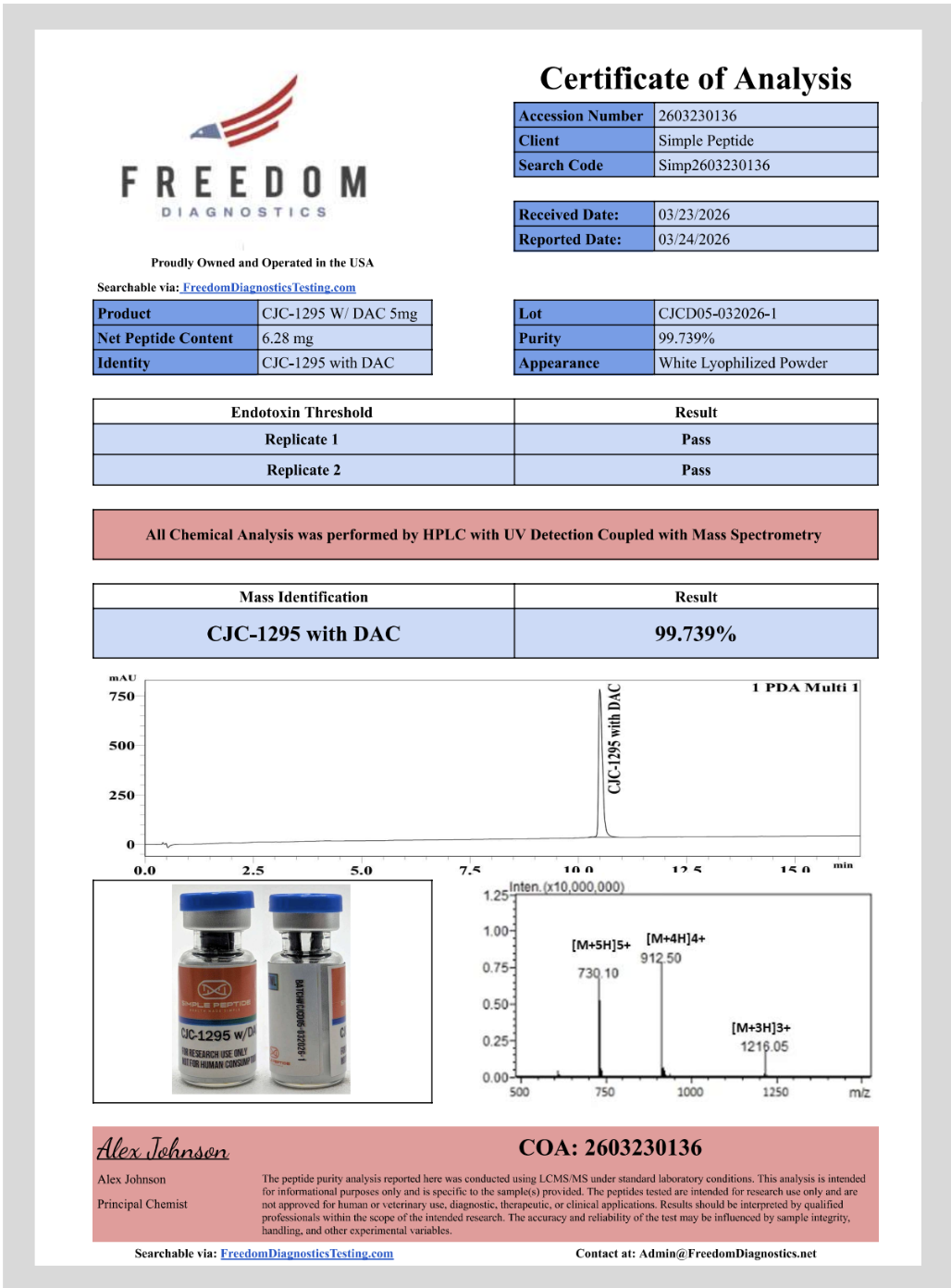
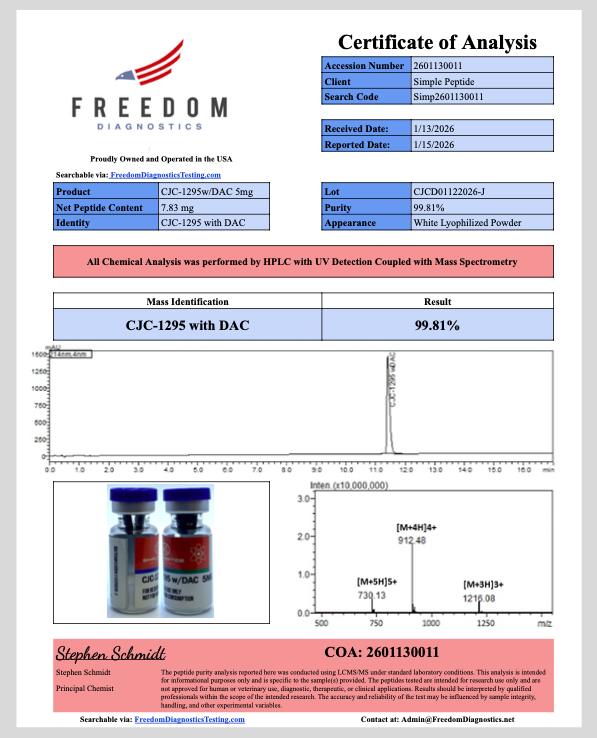
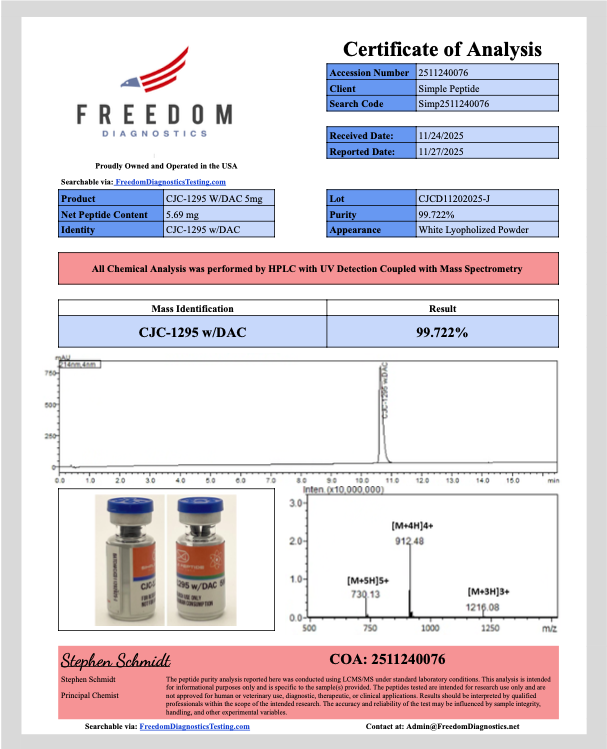
CJC-1295 w/ DAC 5MG is intended strictly for scientific research use and is not for human or veterinary applications. Each batch meets pharmaceutical-grade quality standards to support reliable laboratory research.
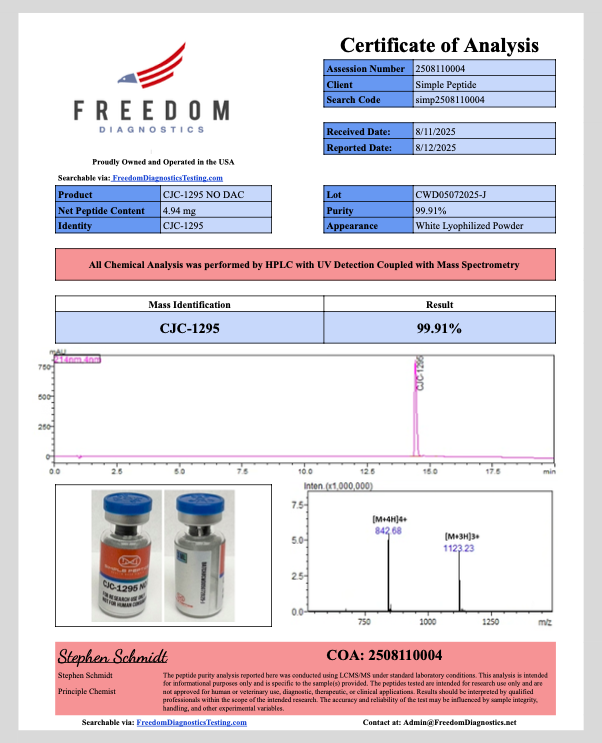
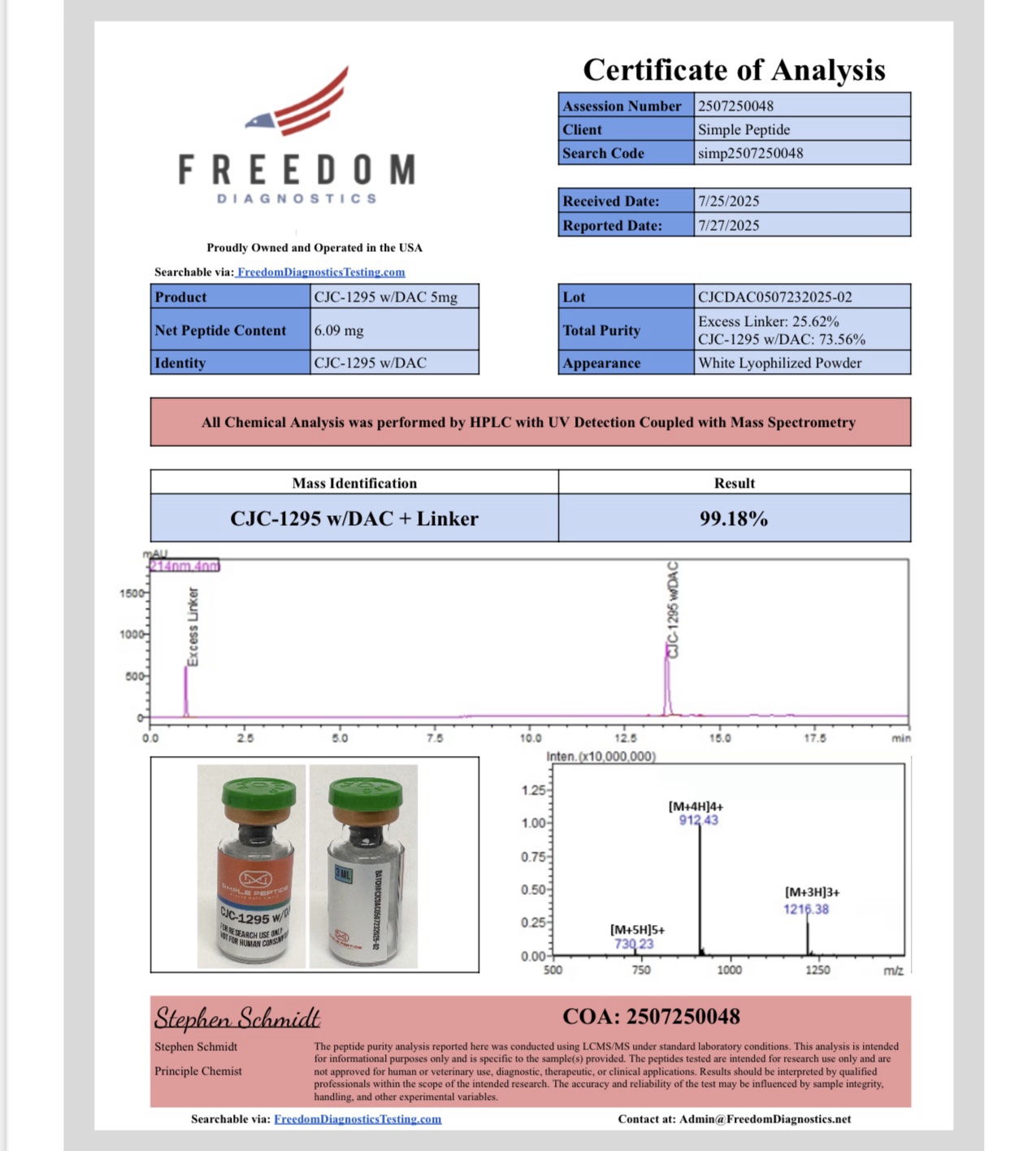
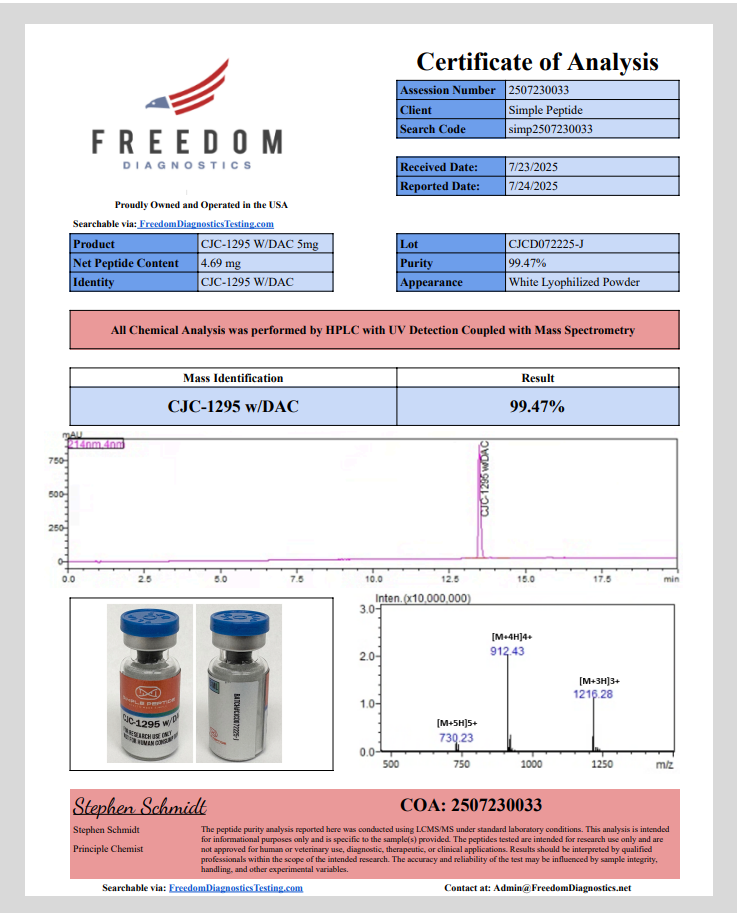
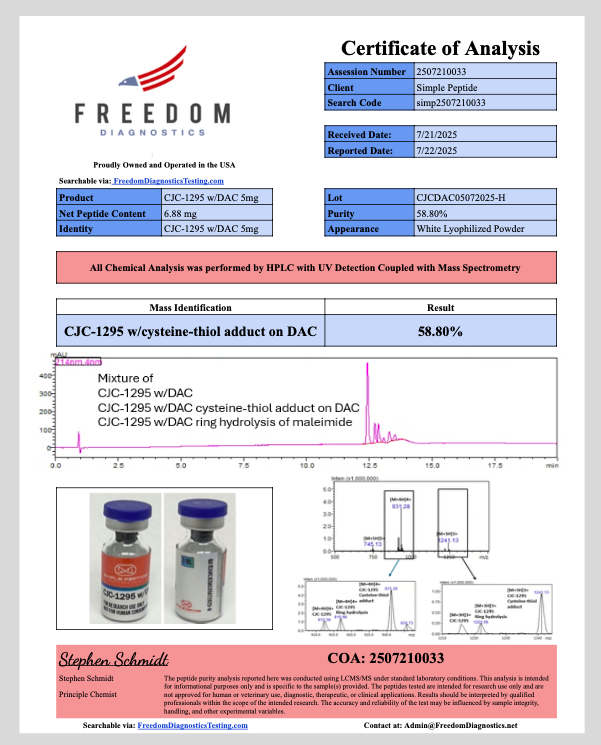
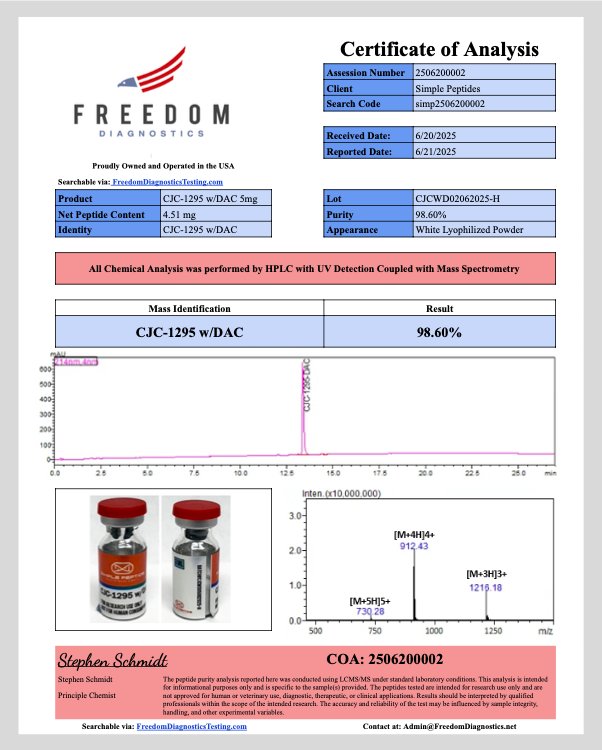
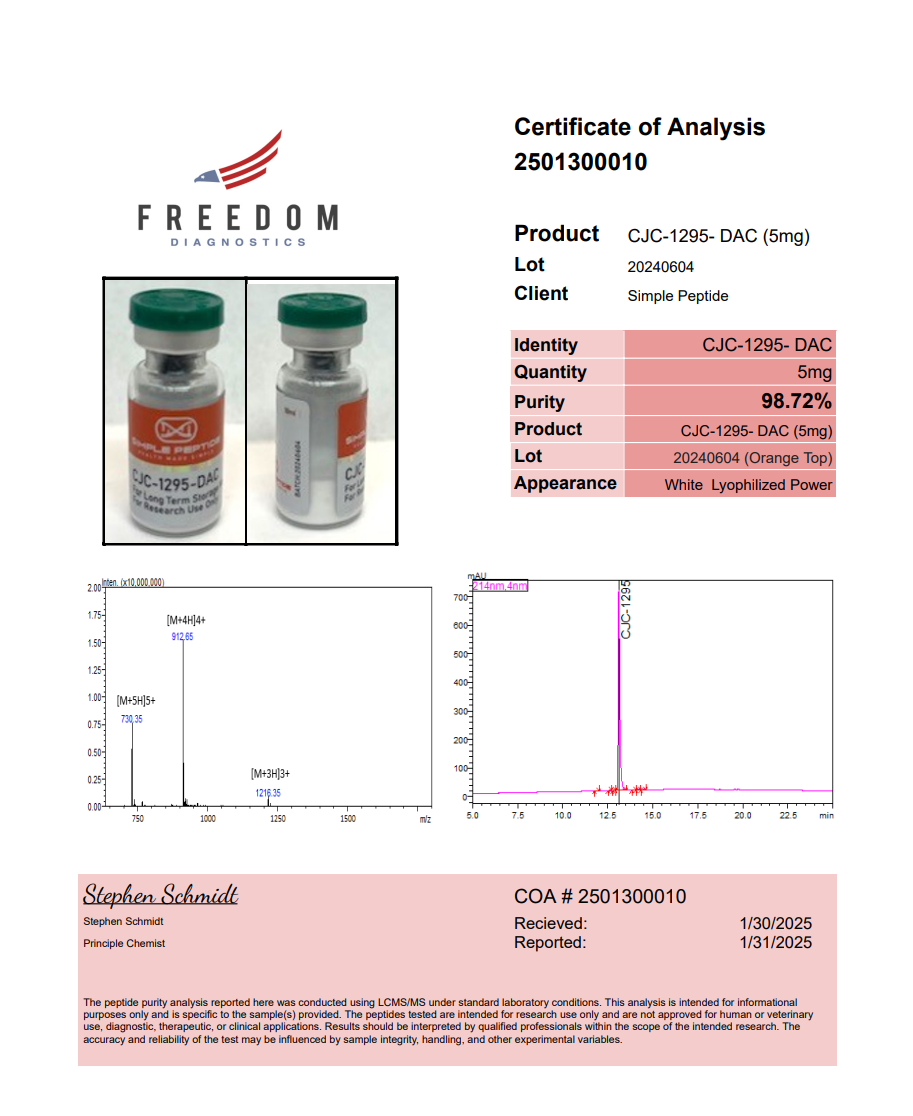
Independent testing and batch documentation allow researchers to review material specifications prior to use. This process supports clear data collection, structured analysis, and dependable research outcomes.