
5-Amino-1MQ
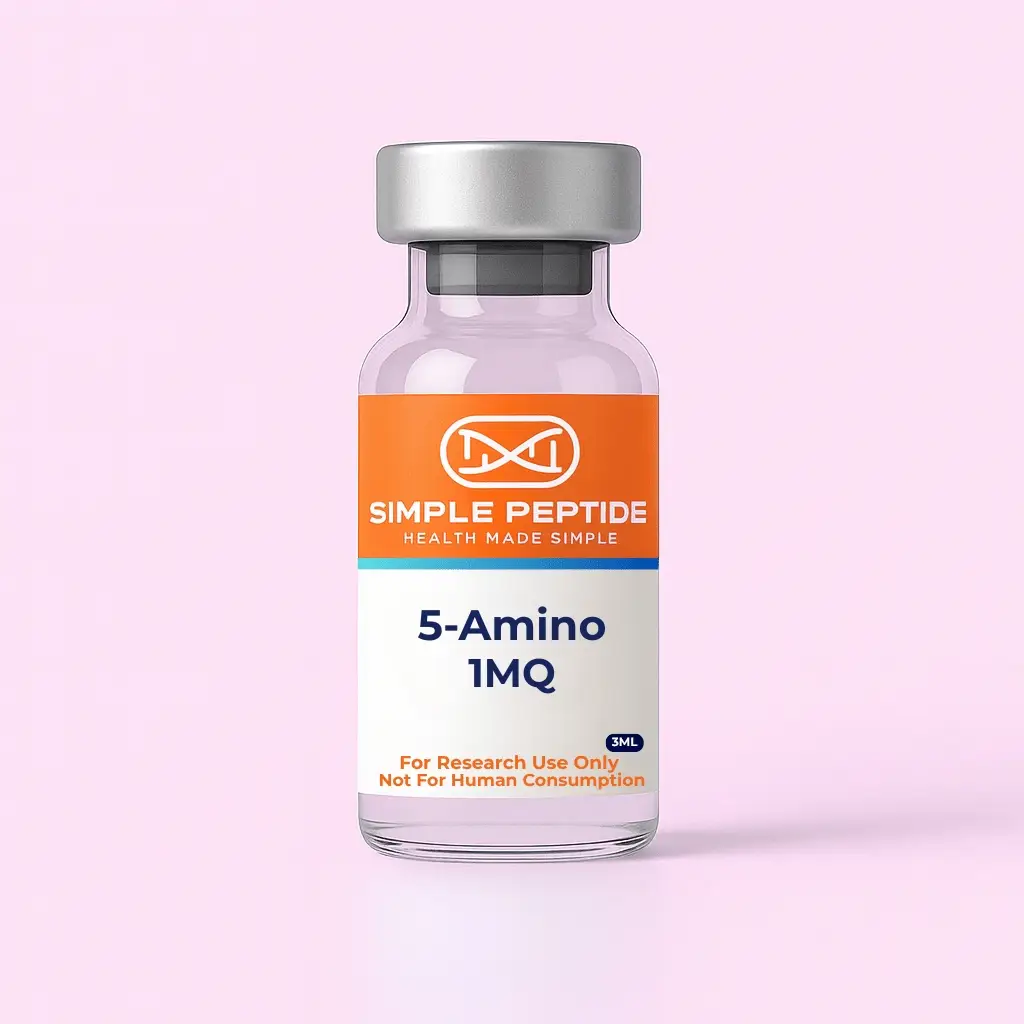


5-Amino-1MQ
$55.00 – $70.00Price range: $55.00 through $70.00
5-Amino-1MQ is a synthetic research compound studied for its ability to block the enzyme nicotinamide N-methyltransferase. By influencing NAD+ activity, it provides scientists with a dependable tool for exploring energy balance, cellular pathways, and molecular regulation in controlled laboratory settings.
| Title | Quantity | Discounted Price |
|---|---|---|
| Bulk Discount v2 | 5 - 9 | 5% $52.25 |
| Bulk Discount v2 | 10 + | 10% $49.50 |

US-Based Support
US-based support available Monday - Friday 7-6pm ET

Volume Discounts
Volume Discounts available on select products

Verified Quality
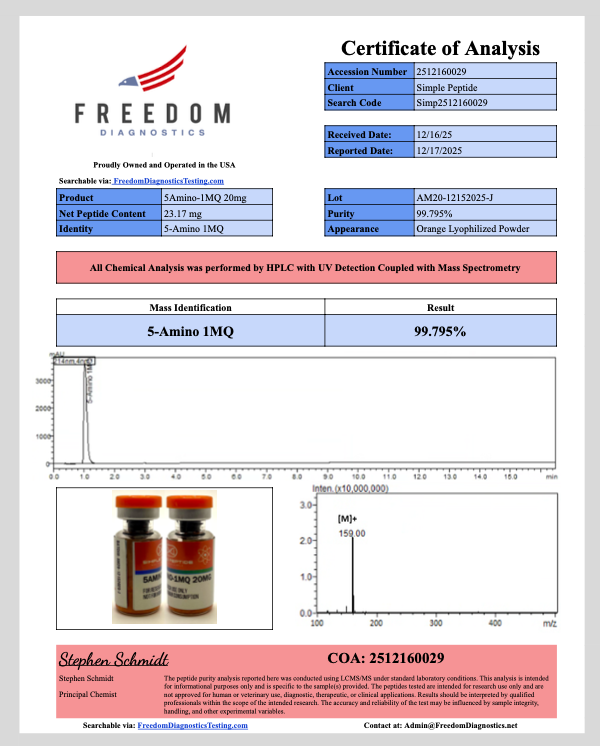
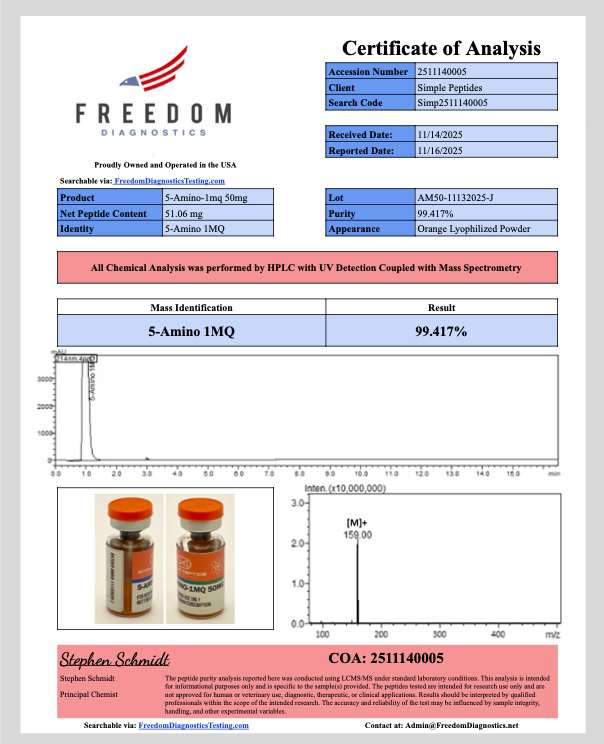
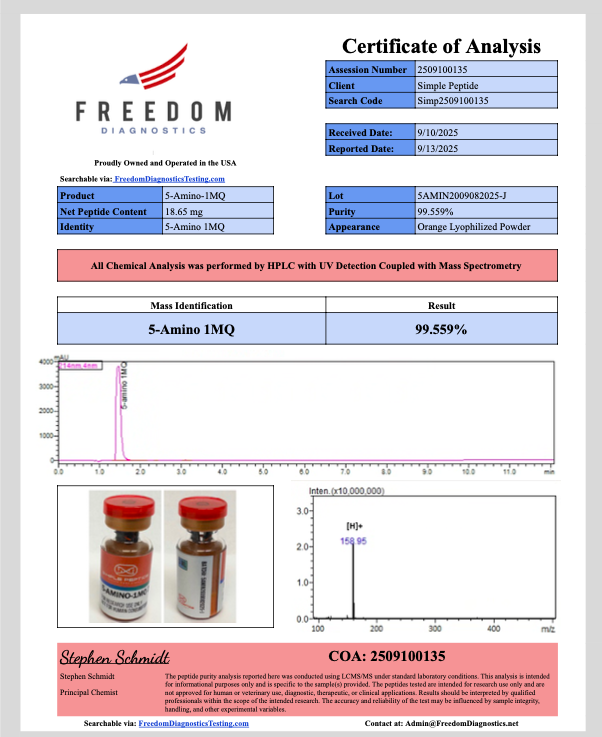
Supported by a Certificate of Analysis.

Research Focused
Intended for laboratory research applications.
Overview of 5-Amino-1MQ Research Applications
5-Amino-1MQ is a synthetic compound that laboratories use to study enzyme-related metabolic pathways. Researchers focus on this compound because it interacts with nicotinamide N-methyltransferase, commonly called NNMT. This enzyme helps regulate NAD+ availability, which directly affects energy production and cellular balance. Because of this connection, scientists use the compound to better understand how enzyme activity influences metabolism.
In controlled research settings, scientists actively track how enzyme inhibition changes metabolic behavior. As a result, laboratories can study cellular responses without adding outside variables that could affect accuracy.
NNMT Inhibition and NAD+ Regulation
NNMT influences part of the NAD+ salvage process. When researchers limit NNMT activity, they can clearly observe how NAD+ levels change inside cells. NAD+ supports many basic cell functions, including energy use, metabolic signaling, and molecular stability.
Because of this role, researchers use these studies to understand how cells respond to shifts in enzyme activity. In addition, this work supports broader research into metabolic pathways and cellular regulation. Since the compound behaves consistently in laboratory conditions, it allows researchers to gather reliable data across repeated experiments.
Laboratory Preparation and Storage
5-Amino-1MQ arrives as a stable, dry powder designed for laboratory use. Before testing, researchers dissolve the powder into a liquid using standard lab methods. Proper handling helps preserve quality and consistency throughout the study.
For example, laboratories store the dry material in a cool, dry area away from light. After mixing, refrigeration helps maintain stability. For long-term storage, researchers freeze the solution at minus 20 degrees Celsius to support extended use.
Research-Only Standards and Quality Control
Manufacturers produce each batch to pharmaceutical-grade quality standards to support repeatable research outcomes. However, the compound is strictly intended for laboratory research only. It is not designed for human or animal use, and researchers do not receive dosing or administration guidance.
Therefore, laboratories can rely on this compound for controlled research while remaining compliant. Its stability, consistent performance, and targeted enzyme interaction make it a dependable option for studies focused on NAD+ pathways and metabolic regulation.
| Size | 10MG, 20MG, 50MG |
|---|
No research information available for this product.
Peptide Research Overview

Peptides are short chains of amino acids studied for their role in cellular signaling and molecular interactions. In research settings, they are commonly used to explore biological pathways and structure–function relationships.
Across scientific disciplines, peptide research supports advances in biochemistry and molecular biology. Their precision and adaptability make peptides essential tools in modern laboratory research.
Key Benefits of Peptides in Research

Support precise investigation of cellular signaling pathways
Enable targeted structure–function research at the molecular level
Offer high specificity for controlled experimental design
Adapt easily across a wide range of research applications
Aid in studying protein interactions and biological responses
Allow consistent and repeatable laboratory testing
Integrate well with modern analytical and research methods
Serve as foundational tools in biochemical and molecular research
Advancing Scientific Research with Peptides

Peptides continue to serve as essential components in modern research due to their flexibility, precision, and well-defined structures. In laboratory settings, researchers rely on peptides to examine biological mechanisms, evaluate molecular interactions, and refine experimental models with a high level of control. Their scalable nature and compatibility with advanced analytical techniques make peptides valuable across both foundational studies and ongoing research development, supporting consistent, reproducible outcomes in controlled scientific environments.
Frequently Asked Questions
5-Amino-1MQ is a synthetic small-molecule compound studied for its ability to inhibit the enzyme nicotinamide N-methyltransferase, commonly referred to as NNMT. This enzyme plays a regulatory role in metabolic signaling and energy balance within cells. By limiting NNMT activity, 5-Amino-1MQ helps preserve nicotinamide, a key precursor involved in NAD+ production, allowing researchers to examine how cellular energy utilization and metabolic efficiency may be influenced.
In professional research environments, 5-Amino-1MQ is examined for its role in metabolic regulation and cellular energy pathways. Scientists study this compound to better understand how enzyme inhibition can impact fat metabolism, glucose utilization, and overall metabolic signaling. Its targeted mechanism makes it useful for exploring metabolic adaptation and energy balance models.
NNMT consumes nicotinamide during methylation processes, which can reduce availability for NAD+ synthesis. By inhibiting NNMT, 5-Amino-1MQ allows more nicotinamide to remain accessible for NAD+ production. NAD+ is a critical coenzyme involved in mitochondrial activity, redox reactions, and cellular communication, making this pathway an area of significant scientific interest.
Yes, 5-Amino-1MQ is frequently studied in the context of fat metabolism and body composition research. By influencing metabolic enzymes rather than appetite or stimulatory pathways, it provides researchers with a tool to examine how cells regulate fat storage and energy expenditure. This has made it a topic of interest in studies focused on metabolic efficiency and adipose signaling.
Unlike many conventional metabolic compounds that rely on hormonal stimulation or nervous system activation, 5-Amino-1MQ operates at the enzymatic level. Its mechanism centers on NNMT inhibition, offering a more targeted approach to studying metabolic regulation. This distinction allows researchers to explore metabolic changes without introducing stimulant-based variables.
5-Amino-1MQ is gaining attention because it addresses metabolism at a foundational biochemical level. As interest in NAD+, mitochondrial health, and metabolic flexibility continues to grow, compounds that influence these pathways through enzyme regulation are becoming increasingly relevant. Its specificity and consistency make it a valuable compound for advanced metabolic research models.
Research Use Only – Legal Disclaimer
All Simple Peptide products labeled as Research Use Only (RUO) are intended strictly for laboratory, investigational, and scientific research purposes. These materials are not approved by the FDA and are not intended for human or veterinary use, clinical applications, diagnostic procedures, or therapeutic treatment of any kind.
By purchasing or using RUO materials, you acknowledge that they will be handled only within an appropriate research environment by qualified personnel who understand the risks, limitations, and regulatory requirements associated with experimental compounds. Products must not be administered to humans or animals, offered as therapeutic agents, or represented as safe or effective for any medical purpose.
Use of these materials is entirely at your own risk. Simple Peptide assumes no liability for misuse, unsafe handling, improper application, or any regulatory or compliance issues arising from their use.